API 5L Grade B

API 5L Grade B line pipes are API standard certified. TUSPIPE strictly controls quality at every stage of pipe production to ensure strength and toughness meet standards. This allows customers to achieve more stable pipeline performance and longer service life in oil and gas transportation projects.

AS1163 C250L0 steel pipes

API 5L Grade B

Instituto Americano del Petróleo API 5L specification is for line pipes used in pipelines for transporting oil, natural gas, and water. The carbon steel pipes that are covered by this specification can be either seamless or welded. The API 5L Grade B pipe includes PSL1 and PSL2 line pipes, and they are classified according to the different end uses and service requirements, such as the transmission of oil, natural gas, or water. The strength of the carbon steel pipes is measured in psi or MPa. The minimum yield strength of Grade B carbon steel pipes is 205MPa, while the minimum tensile strength is 415MPa. Line pipes are also available in higher strengths, such as X42, X46, X52, X56, X60, X65, X70, and X80. These higher strength grades can be used for the transmission of oil and gas in high-pressure and high-temperature environments.

¿Por qué elegir tuspipe?

icono-tubo

Desde 1998, Tianjin United Steel Piping Co., Ltd (TUSPIPE) se ha comprometido a suministrar tubos de línea de alta calidad.

Con más de 500.000 toneladas de capacidad de producción anual, la empresa presta servicio a diversos campos e industrias, como la explotación y transmisión de petróleo y gas, la construcción naval y de automóviles, el agua y la electricidad, la protección del medio ambiente, la ingeniería mecánica, la construcción de infraestructuras, etc.

TUSPIPE da mucha importancia a la calidad de los productos y a un riguroso control de calidad de los mismos. Para mantener la buena calidad de los productos, la empresa ha establecido un Centro de Pruebas e Inspección desde 2004. Con una serie de pruebas de última generación y equipos de inspección, el centro de pruebas e inspección es capaz de realizar las pruebas de tracción, pruebas hidráulicas, pruebas de impacto, DWTT, etc.

API 5L gRADE B Pipe Chemical Composition

- Chemical Composition for API 5L Grade B PSL 1 pipe with t ≤ 0.984”

Grado de acero Mass fraction, % based on heat and product analyses a, c
C Mn P S V Nb Ti
max b max b max max max max max
Tubos soldados
Grade B B 0.26 1.2 0.3 0.3 c, d c, d d
V + Nb:≤0.06, Unless otherwise agreed.
V + Nb + Ti: ≤0.15
For each 0.01% reduction of C; Mn content can be increased by 0.05% to a maximum of 1.65%

a. Cu ≤ = 0,50% Ni; ≤ 0,50%; Cr ≤ 0,50%; y Mo ≤ 0,15%,
b. Por cada reducción de 0,01% por debajo de la concentración máxima especificada para el carbono, se permite un aumento de 0,05% por encima de la concentración máxima especificada para el Mn, hasta un máximo de 1,65% para los grados ≥ L245 o B, pero ≤ L360 o X52; hasta un máximo de 1,75% para los grados > L360 o X52, pero < L485 o X70; y hasta un máximo de 2,00% para el grado L485 o X70.",
c. Salvo acuerdo en contrario NB + V ≤ 0,06%,
d. Nb + V + TI ≤ 0,15%,
e. Salvo acuerdo en contrario .,
f. Salvo acuerdo en contrario, NB + V = Ti ≤ 0,15%,
g. No se permite la adición deliberada de B y el residuo B ≤ 0,001%

- Chemical Composition for API 5L Grade B PSL 2 Pipe with t ≤ 0.984”

Grado de acero Mass fraction, % based on heat and product analyses Carbono Equiv a
C Si Mn P S V Nb Ti Otros CE IIW CE Pcm
max b max max b max max max max max max max
Tubos soldados
Grade BM 0.22 0.45 1.2 0.025 0.015 0.05 0.05 0.04 e,l 0.43 0.25

a. SMLS t>0,787”, los límites CE serán los acordados. Se aplicarán los límites CEIIW si C > 0,12% y los límites CEPcm si C ≤ 0,12%,
b. Por cada reducción de 0,01% por debajo del máximo especificado para C, se admite un aumento de 0,05% por encima del máximo especificado para Mn, hasta un máximo de 1,65% para los grados ≥ L245 o B, pero ≤ L360 o X52; hasta un máximo de 1.75% para los grados > L360 o X52, pero L555 o X80.,
c. Salvo acuerdo en contrario Nb = V ≤ 0,06%,
d. Nb = V = Ti ≤ 0,15%,
e. Salvo acuerdo en contrario, Cu ≤ 0,50%; Ni ≤ 0,30% Cr ≤ 0,30% y Mo ≤ 0,15%,
f. Salvo acuerdo en contrario,
g. Salvo acuerdo en contrario, Nb + V + Ti ≤ 0,15%,
h. Salvo acuerdo en contrario, Cu ≤ 0,50% Ni ≤ 0,50% Cr ≤ 0,50% y MO ≤ 0,50%,
i. Salvo acuerdo en contrario, Cu ≤ 0,50% Ni ≤ 1,00% Cr ≤ 0,50% y MO ≤ 0,50%,
j. B ≤ 0,004%,
k. Salvo acuerdo en contrario, Cu ≤ 0,50% Ni ≤ 1,00% Cr ≤ 0,55%, y MO ≤ 0,80%,
l. Para todas las calidades de tubos PSL 2, excepto las calidades con notas al pie j señaladas, se aplica lo siguiente. Salvo acuerdo en contrario, no se permite ninguna adición intencionada de B y el B residual ≤ 0,001%.

API 5L Grade b Pipe Mechanical Properties

- Mechanical Properties for API 5L Grade B PSL-1 & PSL-2 Pipe

Grado de la tubería Propiedades de tracción - Cuerpo de tubo de SMLS y tubos soldados PSL 2 Costura de tubería soldada
límite elástico a Resistencia a la tracción a Relación a, c Alargamiento Resistencia a la tracción d
Rt0,5  PSI Min Rm  PSI Min R10,5IRm (en 2in) Rm (psi)
Af %
Mínimo Máximo Mínimo Máximo Máximo Mínimo Mínimo
BR, BN, BQ, BM 35,500 65,300 60,200 95,000 0.93 f 60,200
a. Para el grado intermedio, la diferencia entre la resistencia a la tracción mínima especificada y el límite elástico mínimo especificado para el cuerpo del tubo será la indicada para el grado inmediatamente superior.
b. Para las calidades intermedias, la resistencia mínima a la tracción especificada para el cordón de soldadura será la misma que la determinada para la carrocería utilizando la nota a.
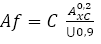
c. El alargamiento mínimo especificado, Af, expresado en porcentaje y redondeado al porcentaje más próximo, se determinará utilizando la siguiente ecuación:
ecuación-fórmula
Donde C es 1 940 para el cálculo con unidades Si y 625 000 para el cálculo con unidades USC.
Axc es el área de la sección transversal de la probeta de tracción aplicable, expresada en milímetros cuadrados (pulgadas cuadradas), como sigue
- Para las probetas de sección circular, 130 mm2 (0,20 pulg2) para las probetas de 12,7 mm (0,500 pulg) y 8,9 mm (,350 pulg) de diámetro; y 65 mm2 (0,10 pulg2) para las probetas de 6,4 mm (0,250 pulg) de diámetro.
- Para las probetas de sección completa, la menor de a) 485 mm2 (0,75 pulg2) y b) el área de la sección transversal de la probeta, derivada utilizando el diámetro exterior especificado y el espesor de pared especificado de la tubería, redondeada a los 10 mm2 (0,10 pulg2) más próximos.
- Para las probetas en tiras, la menor de a) 485 mm2 (0,75 pulgadas2) y b) el área de la sección transversal de la probeta, obtenida utilizando la anchura especificada de la probeta y el espesor de pared especificado de la tubería, redondeada a los 10 mm2 (0,10 pulgadas2) más próximos.
U es la resistencia mínima a la tracción especificada, expresada en megapascales (libras por pulgada cuadrada)

Dimensions and Sizes of API 5L Grade B Line Pipe

When purchasing an API 5L Grade B line pipe, it is essential to check the size and dimensions of the pipe to ensure that it meets the required standards. The dimensions and masses of API 5L line pipes are specified in ISO 4200 and ASME B36.10M. These standards provide a guide for different size pipes and specify the wall thickness of each size. To check if a pipe meets the required standards, refer to these tables. Doing so will help to ensure that the pipe is the right size and has the correct wall thickness. By taking these precautions, buyers can be sure that they are getting a quality product that meets all the requirements.

NPS O. D. Espesor nominal de la pared
DN En pulgadas mm SCH5S SCH10S SCH10 SCH20 SCH30 SCH40 SCH60 SCH80 SCH100 SCH120 SCH140 SCH160 Sth XS XXS
50 2″ 60.3 1.65 2.77 - - - 3.91 - 5.54 - - - 8.74 3.91 5.54 11.07
65 2 1/2″ 73 2.11 3.05 - - - 5.16 - 7.01 - - - 9.53 5.16 7.01 14.02
80 3″ 88.9 2.11 3.05 - - - 5.49 - 7.62 - - - 11.13 5.49 7.52 15.24
90 3 1/2″ 101.6 2.11 3.05 - - - 5.74 - 8.08 - - - - 5.74 8.08 -
100 4″ 114.3 2.11 3.05 - - - 6.02 - 8.58 - 11.13 - 13.49 6.02 8.56 17.12
125 5″ 141.3 2.77 3.4 - - - 6.55 - 9.53 - 12.7 - 15.88 6.55 9.53 18.05
150 6″ 168.3 2.77 3.4 - - - 7.11 - 10.97 - 14.27 - 18.26 7.11 10.97 21.95
200 8″ 219.1 2.77 3.76 - 6.35 7.04 8.18 10.31 12.7 15.09 18.26 20.62 23.01 8.18 12.7 22.23
250 10″ 273.1 3.4 4.19 - 6.35 7.8 9.27 12.7 15.09 18.26 21.44 25.4 28.58 9.27 12.7 25.4
300 12″ 323.9 3.96 4.57 - 6.35 8.38 10.31 14.27 17.48 21.44 25.4 28.58 33.32 9.53 12.7 25.4
350 14″ 355.5 3.96 4.78 6.35 7.92 9.53 11.13 15.09 19.05 23.83 27.79 31.75 35.71 9.53 12.7 -
400 16″ 406.4 4.19 4.78 6.35 7.92 9.53 12.7 16.66 21.44 26.19 30.96 36.53 40.49 9.53 12.7 -
450 18″ 457.2 4.19 4.78 6.35 7.92 11.13 14.27 19.05 23.83 39.36 34.93 39.67 45.24 - - -
500 20″ 508 4.78 5.54 6.35 9.53 12.7 15.09 20.62 26.19 32.54 38.1 44.45 50.01 - - -
550 22″ 558.8 4.78 5.54 6.35 9.53 12.7 - 22.23 28.58 34.93 41.28 47.63 53.98 - - -
600 24″ 609.6 5.54 6.35 6.35 9.53 14.27 17.48 24.61 30.96 38.89 46.02 52.37 59.54 - - -

API 5L Grade B Pipe Tolerance

Tolerancia O.D. Tolerancia W.T.
A, B X42 ~ X70
D < 60.3mm +0,41/-0,40 mm D < 73mm +20%/-12.5% D < 73mm +15%/-12.5%
D ≥ 60,3 m +0,75/-0,40 mm D ≥ 73mm +15%/-12.5% D ≥ 73mm +15%/-12.5%

Delivery Condition for API 5L Grade B Line Pipe

PSL Condiciones de entrega Grado de la tubería
PSL 1 As-rolled, normalizing rolled, thermomechanical rolled, thermo-mechanical formed, normalizing formed, normalized, normalized and tempered or if agreed Q&T SMLS only B
PSL 2 As-rolled BR, X42R

Test and inspection of API 5L Grade B Line pipes

- Prueba hidrostática

Hydrostatic testing is a way of testing pipes for leaks by filling them with water and pressurizing them. Hydrostatic tests are usually performed on newly manufactured pipes, or after repair work has been carried out on existing pipes. The test involves filling the pipe with water and then pressurizing it to a specified level. The pressure is then held for a while while the pipe is monitored for leaks. If any leaks are detected, the weld seam or pipe body may need to be repaired or replaced. Hydrostatic testing is an important part of the manufacturing process for steel pipes, as it helps to ensure that the finished product is safe and fit for its purpose.

- Bending Test

The bending test is a necessary part of the production process for the API 5L line pipe. This test ensures that the steel pipe being produced is of the highest quality and crack-free. To perform the test, a sample of the pipe is placed in a bending machine. The machine then applies pressure to the sample until it reaches the point of fracture. The amount of pressure required to break the pipe is recorded and compared to industry standards. If the pipe meets or exceeds the standards, it is considered suitable for use in API 5L line pipe production. However, if the pipe breaks at a lower pressure than expected, there are likely cracks present in the weld seam. In this case, the pipe will be rejected and recycled.

- Prueba de aplanamiento

The flattening test during API 5L line pipe production is a way of crack detection. A sample of the steel pipe is flattened between two plates and then examined for cracks. The test is conducted on welds, as well as on the body of the pipe. Deformation during the flattening process is monitored in both longitudinal and circumferential directions. The test is considered to pass/fail based on the number and size of cracks that are observed.

- Prueba de impacto CVN

During the impact test for API 5L line pipe production, steel samples are taken from three positions: the pipe body, the welding seam, and the heat-affected zone. The impact test is performed at each position. The results of the impact tests are used to assess the suitability of the steel for use in pipeline construction. The impact tests help to ensure that the steel will be able to withstand the forces that will be applied to it during operation. In addition, the tests can also provide information about the weldability of the steel and its resistance to crack propagation. As a result, the impact test is an essential part of the quality control process for API 5L line pipe production.

- DWT Test for PSL-2 Welded Pipe

The DWTT test is an essential quality control measure during the production of large diameter steel pipes. Also known as the drop-weight tear test, this method is used to evaluate a pipe’s resistance to fracture under impact loading. The test is specified in the industry-standard API 5L specification for steel line pipe. In a DWTT test, a weight is dropped onto the end of a pipe to create an impact load. The resulting fracture is then inspected to determine the energy required to propagate the crack. This information can be used to evaluate the toughness of the pipe material and identify any manufacturing defects. The DWTT test is just one of many quality control measures used during pipe production, but it is an important one that helps to ensure the safety and reliability of steel line pipes.

Suministro de OCTG
OCTG
Slotted-Liner
Liner ranurado
Tubería-Fabricación-Spooling
Fabricación de acero
tipos de conexiones de tuberías
Accesorios de tubería
Scroll al inicio

Obtenga un presupuesto ahora

Rellene el siguiente formulario y nuestro equipo estará encantado de atenderle


    Por favor, demuestre que es humano seleccionando la casilla clave.