TUSPIPE’s API 5L X56 line pipes fully comply with API standards, and the manufactured steel pipes undergo rigorous process inspections. The API 5L X56 rating is suitable for transport projects requiring higher pressure resistance, providing customers with robust and durable solutions.
API 5L X56
API 5L standard covers steel pipes for use in conveying oil, gas, water, and other liquids at various temperatures and pressures. API 5L X56 steel grade is used in the production of different kinds of steel pipe, including ERW steel pipe, seamless steel pipe, LSAW steel pipe, and SSAW steel pipe. API 5L X56 material is a steel grade with improved mechanical properties and strength. It is typically used in the production of steel pipe for use in the transportation of petroleum and natural gas. The increased strength of this steel grade makes it ideal for use in high-pressure applications. X56 material is available in two different grades: PSL-1 and PSL-2. PSL-1 is the most commonly used grade, while PSL-2 is typically used in higher-pressure applications.
L'Institut américain du pétrole‘s API 5L specification is for line pipes used in pipelines for transporting oil, natural gas, and water. The specification covers two types of line pipes: welded and seamless. Welded line pipes are made by joining together sections of pipe using welding techniques, while seamless line pipes are made from a single piece of pipe. Both types of line pipes must meet certain requirements to be certified by the API. For example, they must be able to withstand the high pressures and temperatures that are common in pipeline applications. In addition, they must be resistant to corrosion and have a minimum wall thickness. The API 5L specification is an important standard document that guides manufacturers of line pipes used in pipelines.
Depuis 1998, Tianjin United Steel Piping Co., Ltd (TUSPIPE) s'engage à fournir des tubes de canalisation de haute qualité.
Avec une capacité de production annuelle de plus de 500 000 tonnes, l'entreprise dessert divers domaines et industries, tels que l'exploitation et la transmission du pétrole et du gaz, la construction navale et automobile, l'eau et l'électricité, la protection de l'environnement, l'ingénierie mécanique, la construction d'infrastructures, etc.
TUSPIPE accorde une grande importance à la qualité des produits et à leur contrôle rigoureux. Afin de maintenir une bonne qualité des produits, l'entreprise a mis en place un centre d'essai et d'inspection depuis 2004. Doté d'une série d'équipements d'essai et d'inspection de pointe, le centre d'essai et d'inspection est en mesure d'effectuer des essais de traction, des essais hydrauliques, des essais d'impact, des essais DWTT, etc.
API 5L X56 line pipe is a common grade pipe for the transportation of petroleum, oil and gas. It is also referred to as L390 pipe, which refers to its minimum yield strength in PSI (pounds per square inch). In addition to the transportation of petroleum, oil and gas, API 5L X56 line pipe is also used in the construction industry for applications such as piling jobs. The durability and flexibility of API 5L X56 line pipe make it an ideal choice for a variety of applications.
API 5L X56 Pipe Chemical Composition
- Chemical Composition for API 5L X56 PSL 1 pipe with t ≤ 0.984”
Qualité de l'acier
API 5L X56 Mass fraction, % based on heat and product analyses a,g
C
Mn
P
S
V
Nb
Ti
max b
max b
max
max
max
max
max
Tube soudé
X56
0.26
1.4
0.3
0.3
d
d
d
a. Cu ≤ = 0.50% Ni; ≤ 0.50%; Cr ≤ 0.50%; and Mo ≤ 0.15%, b. For each reduction of 0.01% below the specified maximum concentration for carbon, an increase of 0.05% above the specified maximum concentration for Mn is permissible, up to a maximum of 1.65% for grades ≥ L245 or B, but ≤ L360 or X52; up to a maximum of 1.75% for grades > L360 or X52, but < L485 or X70; and up to a maximum of 2.00% for grade L485 or X70., c. Unless otherwise agreed NB + V ≤ 0.06%, d. Nb + V + TI ≤ 0.15%, e. Unless otherwise agreed., f. Unless otherwise agreed, NB + V = Ti ≤ 0.15%, g. No deliberate addition of B is permitted and the residual B ≤ 0.001%
- Chemical Composition for API 5L X56 PSL 2 Pipe with t ≤ 0.984”
Qualité de l'acier
API 5L X56 Mass fraction, % based on heat and product analyses
Carbon Equiv a
C
Si
Mn
P
S
V
Nb
Ti
Autres
CE IIW
CE Pcm
max b
max
max b
max
max
max
max
max
max
max
Tube soudé
X56M
0.22
0.45
1.3
0.025
0.015
0.05
0.05
0.04
e,l
0.43
0.25
a. SMLS t>0.787”, CE limits shall be as agreed. The CEIIW limits applied if C > 0.12% and the CEPcm limits apply if C ≤ 0.12%, b. For each reduction of 0.01% below the specified maximum for C, an increase of 0.05% above the specified maximum for Mn is permissible, up to a maximum of 1.65% for grades ≥ L245 or B, but ≤ L360 or X52; up to a maximum of 1.75% for grades > L360 or X52, but < L485 or X70; up to a maximum of 2.00% for grades ≥ L485 or X70, but ≤ L555 or X80, and up to a maximum of 2.20% for grades > L555 or X80., c. Unless otherwise agreed Nb = V ≤ 0.06%, d. Nb = V = Ti ≤ 0.15%, e. Unless otherwise agreed, Cu ≤ 0.50%; Ni ≤ 0.30% Cr ≤ 0.30% and Mo ≤ 0.15%, f. Unless otherwise agreed, g. Unless otherwise agreed, Nb + V + Ti ≤ 0.15%, h. Unless otherwise agreed, Cu ≤ 0.50% Ni ≤ 0.50% Cr ≤ 0.50% and MO ≤ 0.50%, i. Unless otherwise agreed, Cu ≤ 0.50% Ni ≤ 1.00% Cr ≤ 0.50% and MO ≤ 0.50%, j. B ≤ 0.004%, k. Unless otherwise agreed, Cu ≤ 0.50% Ni ≤ 1.00% Cr ≤ 0.55%, and MO ≤ 0.80%, l. For all PSL 2 pipe grades except those grades with footnotes j noted, the following applies. Unless otherwise agreed no intentional addition of B is permitted and residual B ≤ 0.001%.
API 5L X56 Pipe Mechanical Properties
- Mechanical Properties for API 5L X56 PSL-1 Pipe
Qualité du tube
Tensile Properties – Pipe Body of SMLS and Welded Pipes PSL 1
Seam of Welded Pipe
Limite d'élasticité a
Résistance à la traction a
Élongation
Résistance à la traction b
Rt0,5 PSI Min
Rm PSI Min
(in 2in Af % min)
Rm PSI Min
X56
65,300
77,500
c
77,500
a. For intermediate grade, the difference between the specified minimum tensile strength and the specified minimum yield for the pipe body shall be as given for the next higher grade.
b. For the intermediate grades, the specified minimum tensile strength for the weld seam shall be the same as determined for the body using footnote a.
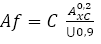
c. The specified minimum elongation, Af, expressed in percent and rounded to the nearest percent, shall be determined using the following equation:
Where C is 1 940 for calculation using Si units and 625 000 for calculation using USC units
Axc is the applicable tensile test piece cross-sectional area, expressed in square millimeters (square inches), as follows
– For circular cross-section test pieces, 130mm2 (0.20 in2) for 12.7 mm (0.500 in) and 8.9 mm (.350 in) diameter test pieces; and 65 mm2 (0.10 in2) for 6.4 mm (0.250in) diameter test pieces.
– For full-section test pieces, the lesser of a) 485 mm2 (0.75 in2) and b) the cross-sectional area of the test piece, derived using the specified outside diameter and the specified wall thickness of the pipe, rounded to the nearest 10 mm2 (0.10in2)
– For strip test pieces, the lesser of a) 485 mm2 (0.75 in2) and b) the cross-sectional area of the test piece, derived using the specified width of the test piece and the specified wall thickness of the pipe, rounded to the nearest 10 mm2 (0.10in2)
U is the specified minimum tensile strength, expressed in megapascals (pounds per square inch)
- Mechanical Properties for API 5L X56 PSL-2 Pipe
Qualité du tube
Tensile Properties – Pipe Body of SMLS and Welded Pipes PSL 2
Seam of Welded Pipe
Limite d'élasticité a
Résistance à la traction a
Ratio a, c
Élongation
Tensile Strength d
Rt0,5 PSI Min
Rm PSI Min
R10,5IRm
(in 2in)
Rm (psi)
Af %
Minimum
Maximum
Minimum
Maximum
Maximum
Minimum
Minimum
X56N, X56Q, X56M
56,600
79,000
71,100
110,200
0.93
f
71,100
a. For intermediate grade, refer to the full API5L specification.
b. for grades > X90 refers to the full API5L specification.
c. This limit applies for pies with D> 12.750 in
d. For intermediate grades, the specified minimum tensile strength for the weld seam shall be the same value as was determined for the pipe body using foot a.
e. for pipe requiring longitudinal testing, the maximum yield strength shall be ≤ 71,800 psi
f. The specified minimum elongation, Af, expressed in percent and rounded to the nearest percent, shall be determined using the following equation:
Where C is 1 940 for calculation using Si units and 625 000 for calculation using USC units
Axc is the applicable tensile test piece cross-sectional area, expressed in square millimeters (square inches), as follows
– For circular cross-section test pieces, 130mm2 (0.20 in2) for 12.7 mm (0.500 in) and 8.9 mm (.350 in) diameter test pieces; and 65 mm2 (0.10 in2) for 6.4 mm (0.250in) diameter test pieces.
– For full-section test pieces, the lesser of a) 485 mm2 (0.75 in2) and b) the cross-sectional area of the test piece, derived using the specified outside diameter and the specified wall thickness of the pipe, rounded to the nearest 10 mm2 (0.10in2)
– For strip test pieces, the lesser of a) 485 mm2 (0.75 in2) and b) the cross-sectional area of the test piece, derived using the specified width of the test piece and the specified wall thickness of the pipe, rounded to the nearest 10 mm2 (0.10in2)
U is the specified minimum tensile strength, expressed in megapascals (pounds per square inch
g. Lower values fo R10,5IRm may be specified by agreement
h. for grades > x90 refers to the full API5L specification.
Dimensions and Sizes of API 5L X56 Line Pipe
When choosing an API 5L X56 line pipe, it is important to check the diameter and size of the pipe to ensure that it meets the required standards. The dimensions and masses of API 5L line pipes are specified in ISO 4200 and ASME B36.10M. These standards provide a guide for different size pipes and specify the wall thickness of each size. To check if a particular pipe meets the required standards, refer to these tables. Doing so will help ensure that the pipe is the right size and has the correct wall thickness. By following these guidelines, you can be sure that your API 5L line pipe will meet the necessary requirements.
NPS
O. D.
W. T.
DN
Pouce
mm
SCH5S
SCH10S
SCH10
SCH20
SCH30
SCH40
SCH60
SCH80
SCH100
SCH120
SCH140
SCH160
Sth
XS
XXS
50
2″
60.3
1.65
2.77
-
-
-
3.91
-
5.54
-
-
-
8.74
3.91
5.54
11.07
65
2 1/2″
73
2.11
3.05
-
-
-
5.16
-
7.01
-
-
-
9.53
5.16
7.01
14.02
80
3″
88.9
2.11
3.05
-
-
-
5.49
-
7.62
-
-
-
11.13
5.49
7.52
15.24
90
3 1/2″
101.6
2.11
3.05
-
-
-
5.74
-
8.08
-
-
-
-
5.74
8.08
-
100
4″
114.3
2.11
3.05
-
-
-
6.02
-
8.58
-
11.13
-
13.49
6.02
8.56
17.12
125
5″
141.3
2.77
3.4
-
-
-
6.55
-
9.53
-
12.7
-
15.88
6.55
9.53
18.05
150
6″
168.3
2.77
3.4
-
-
-
7.11
-
10.97
-
14.27
-
18.26
7.11
10.97
21.95
200
8″
219.1
2.77
3.76
-
6.35
7.04
8.18
10.31
12.7
15.09
18.26
20.62
23.01
8.18
12.7
22.23
250
10″
273.1
3.4
4.19
-
6.35
7.8
9.27
12.7
15.09
18.26
21.44
25.4
28.58
9.27
12.7
25.4
300
12″
323.9
3.96
4.57
-
6.35
8.38
10.31
14.27
17.48
21.44
25.4
28.58
33.32
9.53
12.7
25.4
350
14″
355.5
3.96
4.78
6.35
7.92
9.53
11.13
15.09
19.05
23.83
27.79
31.75
35.71
9.53
12.7
-
400
16″
406.4
4.19
4.78
6.35
7.92
9.53
12.7
16.66
21.44
26.19
30.96
36.53
40.49
9.53
12.7
-
450
18″
457.2
4.19
4.78
6.35
7.92
11.13
14.27
19.05
23.83
39.36
34.93
39.67
45.24
-
-
-
500
20″
508
4.78
5.54
6.35
9.53
12.7
15.09
20.62
26.19
32.54
38.1
44.45
50.01
-
-
-
550
22″
558.8
4.78
5.54
6.35
9.53
12.7
-
22.23
28.58
34.93
41.28
47.63
53.98
-
-
-
600
24″
609.6
5.54
6.35
6.35
9.53
14.27
17.48
24.61
30.96
38.89
46.02
52.37
59.54
-
-
-
API 5L X56 Pipe Tolerance
O.D. Tolerance
W.T. Tolerance
X56
D < 60.3mm
+0.41/-0.40mm
D < 73mm
+15%/-12.5%
D ≥ 60.3m
+0.75/-0.40mm
D ≥ 73mm
+15%/-12.5%
Test and inspection of API 5L X56 Line pipes
- Test hydrostatique
Hydrostatic testing is a key quality control step during the production of API 5L line pipe. The hydro-test involves filling the pipe with water and then subjecting it to pressure to check for leaks. During the test, special attention is paid to the weld seam, as this is the weakest point in the pipe body. The hydro-test is an important way to ensure that the steel pipe meets the required standards for strength and durability. Hydrostatic testing is a key quality control step during the production of API 5L line pipe. The hydro-test involves filling the pipe with water and then subjecting it to pressure to check for leaks. During the test, special attention is paid to the weld seam, as this is the weakest point in the pipe body. The hydro-test is an important way to ensure that the steel pipe meets the required standards for strength and durability. Hydrostatic testing is a key quality control step during the production of steel line pipe for API 5L – which specifies requirements for the manufacture of line pipe used in conveying oil, gas, and water in petroleum industries.
- Bending Test
The bending test is an essential test during API 5L line pipe production. It is mainly to check if there is any crack on the welding seam of the line pipe. The crack is then inspected to see if it meets the requirements for API 5L line pipe production. If the crack does not meet the requirements, the pipe is rejected and a new sample is taken. This test is very important because welding seam crack will cause oil or gas leakage during transportation.
- Test d'aplatissement
The flattening test is performed during the production of the API 5L line pipe. The purpose of the test is to check for any cracks in the steel pipe or welds. A sample of the pipe is placed on a flattening machine, and a wheel is rolled over it to deform the material. The deformation is then measured along both the longitudinal and circumferential axes. The results of the test are used to determine the quality of the pipe and ensure that it meets all safety requirements.
- Test d'impact CVN
The impact test is a mandatory test during the production of steel pipes according to the API 5L specification. The test is conducted on three different positions of the steel pipe: the pipe body, the welding seam, and the heat-affected zone. The purpose of the impact test is to check the Charpy V-Notch (CVN) values of the steel in these three positions. The CVN values are important indicators of the steel’s toughness and resistance to brittle fracture. The impact test is usually conducted at a temperature of -20°C (-4°F).
- DWT Test for PSL-2 Welded Pipe
In the oil and gas industry, large diameter steel pipe is used for a variety of applications, such as transporting crude oil and natural gas. To ensure that these pipes meet the required standards, they must undergo several tests, including the DWTT test. DWTT stands for Drop-Weight Tear Test, and it is used to assess a pipe’s fracture toughness. The test involves dropping a weight onto the pipe, which causes it to fracture. The resulting fracture is then examined to determine the amount of energy required to cause the break. This information is then used to assess the pipe’s suitability for use in high-pressure applications. The DWTT test is just one of many tests that are conducted on large diameter steel pipes during the production process.
OCTG
Doublure fendue
Fabrication d'acier
Raccords de tuyauterie
Défiler vers le haut
Obtenir un devis maintenant
Remplissez le formulaire ci-dessous et notre équipe se fera un plaisir de vous aider.