TUSPIPE’s API 5L X70 line pipe is API certified and commonly used for higher pressure and more complex oil and gas transmission tasks. We have extremely strict and meticulous control over the material and mechanical properties of our pipes, providing customers with piping solutions that combine strength and durability.
API 5L X70
API 5L X70 line pipe is a type of steel pipe that is commonly used in the petroleum and oil and gas industries. This type of pipe is mostly used to transport fluids, including crude oil, natural gas, and petroleum products, from one site to another. This sort of pipe is often constructed from high-strength steel, which enables it to survive the high pressures and temperatures that are common in these industries. In addition, API 5L X80 line pipe is typically coated with a layer of corrosion-resistant material, such as FBE, 3LPE, or 3LPP, to protect it from the harsh environment in which it is used.
The American Petroleum Institute‘s API 5L specification is for line pipes that are used in pipelines to transport oil, natural gas, and water. The specification covers both welded and seamless pipe and includes several grades that are suitable for different applications. Grade B pipes are the most common type of pipe used in pipelines, and are suitable for transporting fluids at moderate temperatures. Grade X pipes are higher-strength pipes that can be used in harsher environments, such as high-pressure or high-temperature applications. In addition to the various grades of pipe, the API 5L specification also includes requirements for testing, coating, and end preparation. These requirements ensure that pipes meet the necessary safety and performance standards for their intended purpose.
API 5L X70 line pipe is a type of pipeline steel used in the transportation of petroleum, oil and gas. It is also referred to as L485 pipeline steel. The minimum yield strength of this material is 485 Mpa. This makes it ideal for transporting petroleum, oil and gas over long distances. API 5L X70 line pipe is also known for its high tensile strength. This makes it ideal for use in applications where there is a need for superior strength and durability. This type of pipeline steel is also resistant to corrosion, making it ideal for use in environments where there is a risk of corrosion.
API 5L X70 Pipe Chemical Composition
- Chemical Composition for API 5L X70 PSL 1 pipe with t ≤ 0.984”
Mass fraction, based upon heat and product analysis a
- Chemical Composition for API 5L X70 PSL 2 Pipe with t ≤ 0.984”
Mass fraction, based upon heat and product analysis % maximum
CARBON EQUIVALENT a
% MAXIMUM
Cb
Si
Mnb
P
S
V
Nb
ティ
その他
シーイーアイダブリュー
CEPcm
SEAMLESS & WELDED PIPES
L485QまたはX70Q
0.18f
0.45f
1.8f
0.025
0.015
g
g
g
h
0.43
0.25
WELDED PIPE
L485M OR X70M
0.12f
0.45f
1.7f
0.025
0.015
g
g
g
h
0.43f
0.25
a. SMLS t>0.787”, CE limits shall be as agreed. The CEIIW limits applied if C > 0.12% and the CEPcm limits apply if C ≤ 0.12%, b. For each reduction of 0.01% below the specified maximum for C, an increase of 0.05% above the specified maximum for Mn is permissible, up to a maximum of 1.65% for grades ≥ L245 or B, but ≤ L360 or X52; up to a maximum of 1.75% for grades > L360 or X52, but < L485 or X70; up to a maximum of 2.00% for grades ≥ L485 or X70, but ≤ L555 or X80, and up to a maximum of 2.20% for grades > L555 or X80., c.別段の合意がない限り、Nb = V ≤ 0.06%、 d.Nb = V = Ti ≤ 0.15%、 e.別段の合意がない限り、Cu≦0.50%;Ni≦0.30% Cr≦0.30%、Mo≦0.15%、 f.別段の合意がない限り、 g.別段の合意がない限り、Nb + V + Ti ≤ 0.15%、 h.特に断りのない限り、Cu≦0.50% Ni≦0.50% Cr≦0.50%、MO≦0.50%、 i.別段の合意がない限り、Cu≦0.50% Ni≦1.00% Cr≦0.50%、MO≦0.50%、 j.b ≤ 0.004%、 k. Unless otherwise agreed, Cu ≤ 0.50% Ni ≤ 1.00% Cr ≤ 0.55%, and MO ≤ 0.80%, l.脚注j が付された等級を除くすべてのPSL 2鋼管には、以下が適用される。別段の合意がない限り、意図的なBの添加は認められず、残留B≦0.001%。
API 5L X70 Pipe Mechanical Properties
- Mechanical Properties for API 5L X70 PSL-1 Pipe
Y.S
T.S
ELONGATION
Mpa(psi)
Mpa(psi)
分
分
分
485(70 300)
570(82 700)
F
a. For intermediate grade, the difference between the specified minimum tensile strength and the specified minimum yield for the pipe body shall be as given for the next higher grade.
b. For the intermediate grades, the specified minimum tensile strength for the weld seam shall be the same as determined for the body using footnote a.
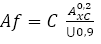
c. The specified minimum elongation, Af, expressed in percent and rounded to the nearest percent, shall be determined using the following equation:
Where C is 1 940 for calculation using Si units and 625 000 for calculation using USC units
Axc is the applicable tensile test piece cross-sectional area, expressed in square millimeters (square inches), as follows
– For circular cross-section test pieces, 130mm2 (0.20 in2) for 12.7 mm (0.500 in) and 8.9 mm (.350 in) diameter test pieces; and 65 mm2 (0.10 in2) for 6.4 mm (0.250in) diameter test pieces.
– For full-section test pieces, the lesser of a) 485 mm2 (0.75 in2) and b) the cross-sectional area of the test piece, derived using the specified outside diameter and the specified wall thickness of the pipe, rounded to the nearest 10 mm2 (0.10in2)
– For strip test pieces, the lesser of a) 485 mm2 (0.75 in2) and b) the cross-sectional area of the test piece, derived using the specified width of the test piece and the specified wall thickness of the pipe, rounded to the nearest 10 mm2 (0.10in2)
U is the specified minimum tensile strength, expressed in megapascals (pounds per square inch)
- Mechanical Properties for API 5L X70 PSL-2 Pipe
Y.S
T.S
ELONGATION
Mpa(psi)
Mpa(psi)
分
分
分
485(70 300)
635(92 100)
F
a. For intermediate grade, refer to the full API5L specification.
b. for grades > X90 refers to the full API5L specification.
c. This limit applies for pies with D> 12.750 in
d. For intermediate grades, the specified minimum tensile strength for the weld seam shall be the same value as was determined for the pipe body using foot a.
e. for pipe requiring longitudinal testing, the maximum yield strength shall be ≤ 71,800 psi
f. The specified minimum elongation, Af, expressed in percent and rounded to the nearest percent, shall be determined using the following equation:
Where C is 1 940 for calculation using Si units and 625 000 for calculation using USC units
Axc is the applicable tensile test piece cross-sectional area, expressed in square millimeters (square inches), as follows
– For circular cross-section test pieces, 130mm2 (0.20 in2) for 12.7 mm (0.500 in) and 8.9 mm (.350 in) diameter test pieces; and 65 mm2 (0.10 in2) for 6.4 mm (0.250in) diameter test pieces.
– For full-section test pieces, the lesser of a) 485 mm2 (0.75 in2) and b) the cross-sectional area of the test piece, derived using the specified outside diameter and the specified wall thickness of the pipe, rounded to the nearest 10 mm2 (0.10in2)
– For strip test pieces, the lesser of a) 485 mm2 (0.75 in2) and b) the cross-sectional area of the test piece, derived using the specified width of the test piece and the specified wall thickness of the pipe, rounded to the nearest 10 mm2 (0.10in2)
U is the specified minimum tensile strength, expressed in megapascals (pounds per square inch
g. Lower values fo R10,5IRm may be specified by agreement
h. for grades > x90 refers to the full API5L specification.
Dimensions and Sizes of API 5L X70 Line Pipe
When selecting an API 5L X70 pipe, it is important to check the diameter and size of the pipe to ensure it meets the required standards. The dimensions and masses of API 5L pipes are specified in ISO 4200 and ASME B36.10M. These standards provide guidelines for different size pipes and specify the wall thickness of each size. To check if a particular pipe meets the required standards, refer to these tables. Doing so will help ensure that the pipe is the right size and has the correct wall thickness. By following these steps, you can be sure that you are selecting a high-quality API 5L pipe that will meet your needs.
NPS
O.D.
W.T.
識別名
インチ
mm
SCH5S
SCH10S
SCH10
SCH20
SCH30
SCH40
SCH60
SCH80
SCH100
SCH120
SCH140
SCH160
ス
XS
XXS
50
2″
60.3
1.65
2.77
-
-
-
3.91
-
5.54
-
-
-
8.74
3.91
5.54
11.07
65
2 1/2″
73
2.11
3.05
-
-
-
5.16
-
7.01
-
-
-
9.53
5.16
7.01
14.02
80
3″
88.9
2.11
3.05
-
-
-
5.49
-
7.62
-
-
-
11.13
5.49
7.52
15.24
90
3 1/2″
101.6
2.11
3.05
-
-
-
5.74
-
8.08
-
-
-
-
5.74
8.08
-
100
4″
114.3
2.11
3.05
-
-
-
6.02
-
8.58
-
11.13
-
13.49
6.02
8.56
17.12
125
5″
141.3
2.77
3.4
-
-
-
6.55
-
9.53
-
12.7
-
15.88
6.55
9.53
18.05
150
6″
168.3
2.77
3.4
-
-
-
7.11
-
10.97
-
14.27
-
18.26
7.11
10.97
21.95
200
8″
219.1
2.77
3.76
-
6.35
7.04
8.18
10.31
12.7
15.09
18.26
20.62
23.01
8.18
12.7
22.23
250
10″
273.1
3.4
4.19
-
6.35
7.8
9.27
12.7
15.09
18.26
21.44
25.4
28.58
9.27
12.7
25.4
300
12″
323.9
3.96
4.57
-
6.35
8.38
10.31
14.27
17.48
21.44
25.4
28.58
33.32
9.53
12.7
25.4
350
14″
355.5
3.96
4.78
6.35
7.92
9.53
11.13
15.09
19.05
23.83
27.79
31.75
35.71
9.53
12.7
-
400
16″
406.4
4.19
4.78
6.35
7.92
9.53
12.7
16.66
21.44
26.19
30.96
36.53
40.49
9.53
12.7
-
450
18″
457.2
4.19
4.78
6.35
7.92
11.13
14.27
19.05
23.83
39.36
34.93
39.67
45.24
-
-
-
500
20″
508
4.78
5.54
6.35
9.53
12.7
15.09
20.62
26.19
32.54
38.1
44.45
50.01
-
-
-
550
22″
558.8
4.78
5.54
6.35
9.53
12.7
-
22.23
28.58
34.93
41.28
47.63
53.98
-
-
-
600
24″
609.6
5.54
6.35
6.35
9.53
14.27
17.48
24.61
30.96
38.89
46.02
52.37
59.54
-
-
-
API 5L X70 Pipe Tolerance
O.D. Tolerance
W.T. Tolerance
X70
D < 60.3mm
+0.41/-0.40mm
D < 73mm
+15%/-12.5%
D ≥ 60.3m
+0.75/-0.40mm
D ≥ 73mm
+15%/-12.5%
Test and inspection of API 5L X70 Line pipes
- 静水圧試験
Hydrostatic testing is a commonly used method for testing pressure vessels, piping, and other equipment. The test involves filling the water vessel with water and pressurizing it to a specified level. The water is then held at that pressure for a period of time before being released. The entire process is typically repeated several times. Hydrostatic testing is an important step in the production of API 5L line pipe because it helps to ensure the pipe body and weld seam are watertight. A leak during hydrostatic testing can indicate a flaw in the pipe that could cause problems down the line. As a result, hydrostatic testing is an essential part of quality control for API 5L line pipe production.
- 曲げテスト
The bending test during API 5L line pipe production is a crucial quality assurance step that helps to ensure the safety of the final product. During the test, a sample of the steel pipe is bent to a specified degree and then examined for cracks. This helps to ensure that the pipe will be able to withstand the same degree of bending during normal use. The test also helps to identify potential weld problems that could lead to failure. As a result, the bending test is an essential part of ensuring the quality of the API 5L line pipe.
- 平坦化テスト
Flattening tests are conducted during the production of API 5L line pipe to ensure that the steel pipe does not crack and that the weld is not deformed. The test is conducted by taking a sample of the steel pipe and subjecting it to a longitudinal and circumferential load. The deformation of the pipe is monitored during the test, and the results are used to assess the strength of the pipe. The flattening test is an important quality control measure that helps to ensure the safety and reliability of the API 5L line pipe.
- CVN衝撃テスト
The impact test is one of the important subjects during API 5L line pipe production. It mainly focuses on three test areas: pipe body, weld seam, and heat-affected zone. The Charpy impact test, drop-weight tear test, and CERT are commonly used in assessing the impact properties of line pipe steels. The results show that the impact toughness of HFW pipe is much higher than that of SAW pipe in all three zones. It also indicates that the transition temperature is a critical parameter to control the Charpy impact properties of line pipe steels. quenched and tempered (Q&T) process is a promising heat treatment to improve the impact properties of line pipe steels. The Q&T process not only can improve the toughness of base metal but also can refine the grains of weld metal and heat-affected zone, which leads to a significant increase in the impact toughness of line pipe steel. Therefore, the Q&T process should be considered as a potential option to improve the impact performance of API 5L line pipe steels.
Reasons of Choosing API 5L X70
Aspects of X70 carbon steel pipe or API 5L L485Q steel pipe that is well-known include durability, toughness, dependability, and security. PSL1 and PSL2 carbon steel pipes are available from API 5L X70 PSL1 carbon steel pipe suppliers. API 5L X70 PSL2 steel pipe is non-combustible. As well as being corrosion resistant even under extreme weather circumstances, X70 Line Pipe is also well-suited for use in sour service due to its strong corrosion resistance. API 5L grade x70 PSL2 pipes may be utilized as fluid pipes, water pipes, Line pipes, construction steel tubes, and piling tubes in a variety of sectors including textile, dairy, oil, and gas, petrochemical, sugar and paper, chemical and fertilizers, engineering and power generation.
Square cut, beveled, couplers, or threaded ends are used to complete the ends of the API 5L X70 PSL 1 pipe. Steel Pipe Grade X70 connections for the ends may be plain, screwed, threaded, or beveled according to the application. API 5L gr x70 pipes are available in a variety of configurations, including welded, CWD, ERW, fabricated, and seamless. API 5L X70 ERW Pipe is available in a variety of shapes and sizes, including Hydraulic Tube, Round, Square, ‘U’ Shape, Rectangle, pancake Coil, and coiled.