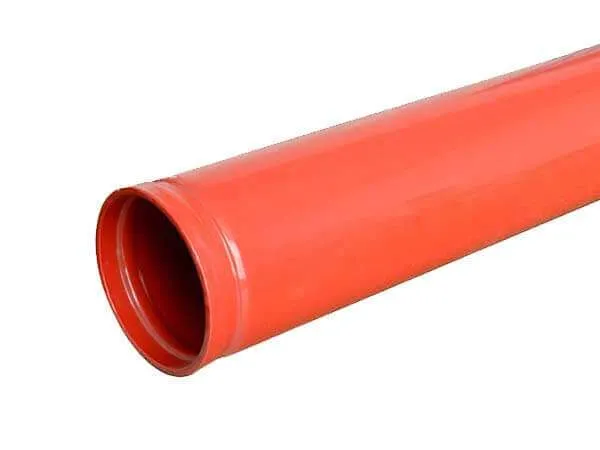
AS/ NZS 1163 Steel PIPE MANUFACTURER
TUSPIPE ensures full compliance with AS/NZS 1163 standards during the production of its steel pipes. The mechanical properties, chemical composition, wall thickness, and dimensions of the steel pipes are all certified to AS/NZS 1163 standards, achieving optimal performance.
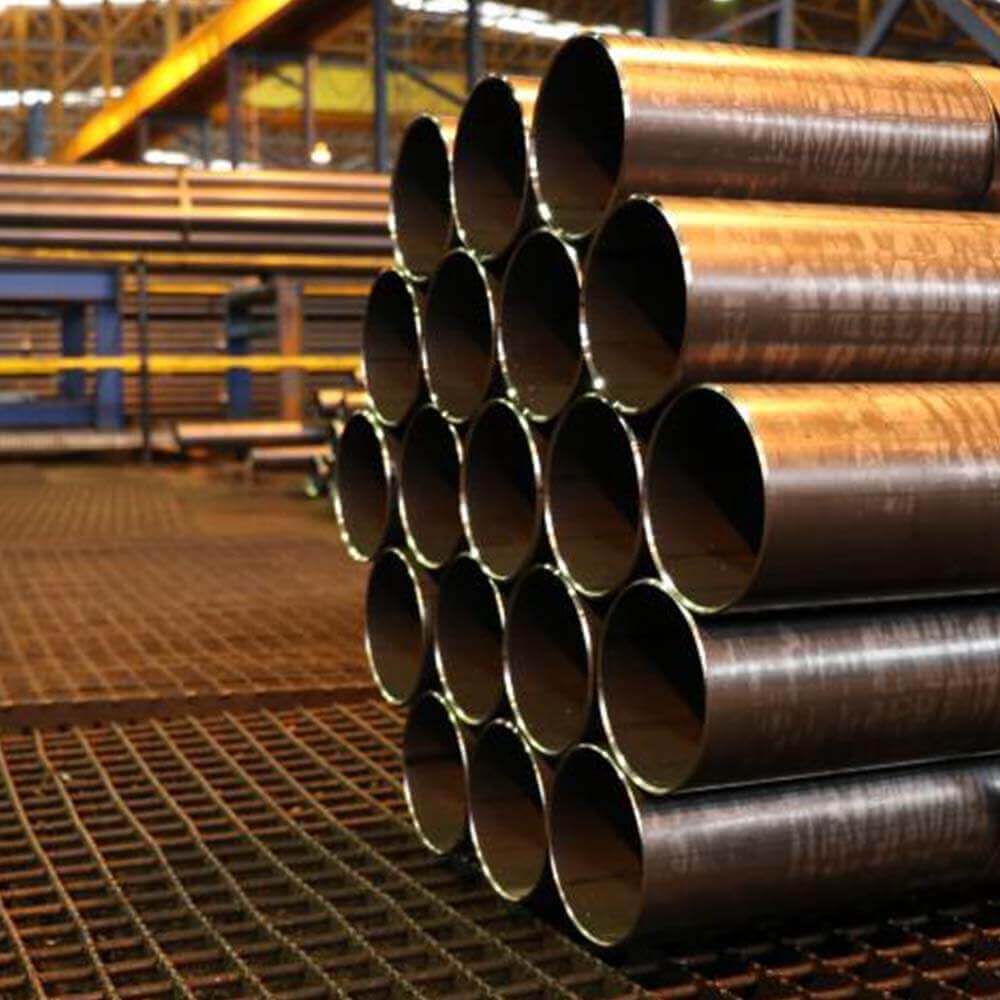
AS 1163
AS/NZS 1163 is the Australian/New Zealand Standard for Cold-formed structural steel hollow sections. This Standard specifies the requirements for the production and supply of cold-formed, electric resistance-welded, steel hollow sections used for structural purposes. It considers three strength grades, with or without impact properties, that are suitable for welding. This Standard applies to structural hollow sections formed cold without subsequent heat treatment. The purpose of AS 1163 standard is to provide manufacturers and suppliers with a uniform method of specifying the requirements for the production of cold-formed, electric resistance-welded, steel hollow sections. The dimensions, tolerances, and other relevant properties specified in this Standard are those appropriate to current manufacturing capabilities and practices. This Standard is not intended to convert non-compliant steels into grades that meet the requirements of this Standard. However, nothing in this Standard shall be taken to prohibit the use of lower grades of material than those specified if such use can be shown to be consistent with good engineering practice. In particular, nothing in AS/NZS 1163 standard precludes the formation of cubic or non-circular shapes from material complying with the dimensional tolerances specified herein by methods.
Steel Grades of AS/NZS 1163 Pipes
The grade designation (for example, C250) is based on the steel’s nominal minimum yield strength (in MPa). To indicate that the section is cold-formed, the prefix ‘C’ is used before the value of the nominal yield strength of the steel. AS1163 only takes into account cold-formed structural steel hollow sections. As specified in AS1163, the suffix ‘L0’ denotes impact properties at 0°C.
C250
AS1163 C250 represents cold-formed structural steel hollow sections with 250 MPa minimum yield strength, and no impact test required.
C250 L0
C250L0 hollow sections are frequently used in construction, as they offer good strength and resistance to impact forces. But not suitable for use in high-stress applications.
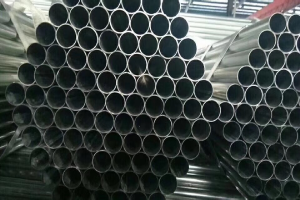
C350
AS1163 C350 means cold-formed structural steel hollow sections with 350 MPa minimum yield strength. It is an essential material in today’s construction industry.
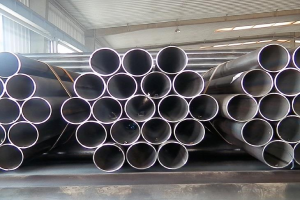
C350 L0
their superior strength and durability make them ideal for use in construction, especially in areas where high winds or seismic activity are a concern.
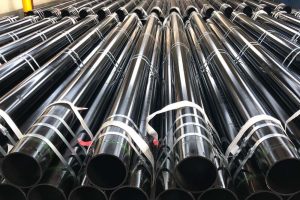
Examples :
AS / NZS 1163-C350
AS / NZS 1163-C350L0
where
AS / NZS 1163 = number of this Standard
C = cold – formed sections
350 = minimum yield strength in MPa ( see Table 7)
L = guaranteed impact properties of the material ( when applicable )
0 = low temperature impact test at 0C( when applicable )
Below, we present the dimensions/mechanical properties/chemical composition/wall thicknesses of AS 1163 tubing as well as tubing experimental data. Includes all AS 1163 standardized steel grades that our manufacturers are able to produce. We hope this will be helpful to you!
Dimensions and Sizes of AS 1163 Round Pipes
| Outside Diameter | Thickness | Mass per Unit Length | Outside Diameter | Thickness | Mass per Unit Length |
|---|---|---|---|---|---|
| O . D . | W . T . | Weight | O . D . | W . T . | Weight |
| mm | mm | kg / m | mm | mm | kg / m |
| 42.4 | 3.2 | 3.09 | 165.1 | 3.0 | 12.00 |
| 42.4 | 4.0 | 3.79 | 165.1 | 3.5 | 13.90 |
| 42.4 | 4.9 | 4.53 | 165.1 | 5.0 | 19.70 |
| 48.3 | 3.2 | 3.56 | 165.1 | 5.4 | 21.30 |
| 48.3 | 4.0 | 4.37 | 168.3 | 4.8 | 19.40 |
| 48.3 | 5.4 | 5.71 | 168.3 | 6.4 | 25.60 |
| 60.3 | 3.6 | 5.03 | 168.3 | 7.1 | 28.20 |
| 60.3 | 4.5 | 6.19 | 219.1 | 4.8 | 25.40 |
| 60.3 | 5.4 | 7.31 | 219.1 | 6.4 | 33.60 |
| 76.1 | 2.3 | 4.19 | 219.1 | 8.2 | 42.60 |
| 76.1 | 3.2 | 5.75 | 273.1 | 4.8 | 31.80 |
| 76.1 | 3.6 | 6.44 | 273.1 | 6.4 | 42.10 |
| 76.1 | 4.5 | 7.95 | 273.1 | 9.3 | 60.50 |
| 76.1 | 5.9 | 10.20 | 323.9 | 6.4 | 50.10 |
| 88.9 | 2.6 | 5.53 | 323.9 | 9.5 | 73.70 |
| 88.9 | 3.2 | 6.76 | 323.9 | 12.7 | 97.50 |
| 88.9 | 4.0 | 8.38 | 355.6 | 6.4 | 55.10 |
| 88.9 | 4.8 | 9.96 | 355.6 | 9.5 | 81.10 |
| 88.9 | 5.0 | 10.30 | 355.6 | 12.7 | 107.00 |
| 88.9 | 5.5 | 11.30 | 406.4 | 6.4 | 63.10 |
| 88.9 | 5.9 | 12.10 | 406.4 | 9.5 | 93.00 |
| 101.6 | 2.6 | 6.35 | 406.4 | 12.7 | 123.00 |
| 101.6 | 3.2 | 7.77 | 457.0 | 6.4 | 71.10 |
| 101.6 | 4.0 | 9.63 | 457.0 | 9.5 | 105.00 |
| 101.6 | 5.0 | 11.90 | 457.0 | 12.7 | 139.00 |
| 114.3 | 3.2 | 8.77 | 508.0 | 6.4 | 79.20 |
| 114.3 | 3.6 | 9.83 | 508.0 | 9.5 | 117.00 |
| 114.3 | 4.5 | 12.20 | 508.0 | 12.7 | 155.00 |
| 114.3 | 4.8 | 13.00 | 610.0 | 6.4 | 95.30 |
| 114.3 | 5.4 | 14.50 | 610.0 | 9.5 | 141.00 |
| 114.3 | 6.0 | 16.00 | 610.0 | 12.7 | 187.00 |
| 139.7 | 3.0 | 10.10 | – | ||
| 139.7 | 3.5 | 11.80 | |||
| 139.7 | 5.0 | 16.60 | |||
| 139.7 | 5.4 | 17.90 | |||
Chemical Composition of AS 1163 Materials
As per the AS1163 standard, sampling methods for chemical analysis must be in accordance with AS/NZS 1050.1 or ISO 14284. This is to ensure that the results of the analysis are accurate. The accuracy of the results is essential in order to make decisions about the quality of the product. AS/NZS 1050 series Standards or other procedures that achieve the same, or better, degree of accuracy must be used in order to determine the chemical composition. This is because it is important to have reliable information about the chemical composition in order to make decisions about the safety and quality of the product.
| Grades ( see Note 1) | Chemical composition ( cast or product analysis )( see Note 2)% max . | ||||||||||
|---|---|---|---|---|---|---|---|---|---|---|---|
| C | Si | Mn | P | S | Cr | Mo | Al ( see Note 3) | Ti | Micro – alloying elements | CE ( see Note 4) | |
| C250,C250L0 | 0.12 | 0.05 | 0.5 | 0.03 | 0.03 | 0.15 | 0.1 | 0.1 | 0.04 | 0.03( see Note 5) | 0.25 |
| C350,C350L0 | 0.2 | 0.25 | 1.6 | 0.03 | 0.03 | 0.3 | 0.1 | 0.1 | 0.04 | 0.15( see Note 6) | 0.43 |
| C450,C450L0 | 0.2 | 0.25( see Note 7) | 1.7 | 0.03 | 0.03 | 0.3 | 0.35 | 0.1 | 0.04 | 0.15( see Note 6) | 0.43 |
| NOTES : 1 The use of sulphide modification manufacturing techniques for these grades is permitted . 2 The following elements may be present to the limits stated : ( a ) Copper 0.25%. ( b ) Nickel 0.25%. 3 Limits specified are for soluble or total aluminium . 4 Carbon equivalent ( CE ) is calculated from the following equation : | |||||||||||

5 Applies to niobium and vanadium only . However , niobium greater than 0.010% is not permitted .
6 Applies to niobium , vanadium and titanium only . However , vanadium greater than 0.10% is not permitted .
7 For circular hollow sections ( CHS ), the silicon limit shall be 0.45.
Mechanical Properties of AS/NZS 1163 Materials
Tensile tests, impact tests, and flattening tests are very important when measuring the mechanical properties of AS1163 materials. These tests help determine the material’s ability to resist forces that can cause it to break or deform. The tensile test measures a material’s ability to withstand pulling forces, while the impact test measures its resistance to shattering forces. The flattening test, meanwhile, assesses a material’s ability to resist crushing forces. Each of these tests is essential for understanding the overall strength and durability of AS1163 materials. By assessing the results of these tests, engineers can ensure that these materials will be able to perform as intended in a variety of applications.
Tensile testing is an essential process for determining the strength and properties of materials. In order to ensure accurate results, it is important to follow the guidelines set out in AS 1391. This standard specifies the rate of straining that should be used when approaching the yield strength, as well as the limits for the conventional straining rate. In addition, the impact test specified in AS 1544.2 must be carried out on each of the three test pieces prepared from each sample. These tests are essential for ensuring the safety and quality of materials.
- AS1163 Tensile Test Requirements
| Grade | Minimum yield strength MPa | Minimum tensile strength MPa | Minimum elongation as a proportion of the gauge length of 5.65√S。( see Note )% | |||||
|---|---|---|---|---|---|---|---|---|
| Circular hollow sections d0 / t | Rectangular hollow sections b / t , d / t | |||||||
| ≤15 | >15≤30 | >30 | ≤15 | >15≤30 | >30 | |||
| C250,C250LO | 250 | 320 | 18 | 20 | 22 | 14 | 16 | 18 |
| C350,C350LO | 350 | 430 | 16 | 18 | 20 | 12 | 14 | 16 |
| C450,C450L0 | 450 | 500 | 12 | 14 | 16 | 10 | 12 | 14 |
| NOTE : These limits apply to the face from which the tensile test is taken . That is , for RHS , the use of b / t or d / t ratio is dependent on which face the test specimen is cut from . For SHS , there is only one ratio ( as b = d ). | ||||||||
- AS 1163 Charpy V-Notch Impact Test Requirements
| CHARPY V – NOTCH IMPACT TEST REQUIREMENTS | |||||||
|---|---|---|---|---|---|---|---|
| Grade | Test temperature ℃ | Minimum absorbed energy , J | |||||
| Size of test piece | |||||||
| 10 mm x10 mm | 10 mm x 7.5 mm | 10mmx5mm | |||||
| Average of 3 tests | Individual test | Average of 3 tests | Individual test | Average of 3 tests | Individual test | ||
| C250LO C350L0 C450LO | 0 | 27 | 20 | 22 | 16 | 18 | 13 |
The tolerances of AS 1163 Standard
The tables given below show the dimensional and mass tolerances for AS1163 cold-formed hollow sections. The first table is for shape and mass, while the second is for length. As can be seen, the tolerances are relatively tight, especially for mass. This is due to the fact that hollow sections are often used in load-bearing applications, and even small deviations from the nominal dimensions can lead to significant changes in performance. As a result, it is important to ensure that cold-formed hollow sections meet the tolerances given in the tables below. Doing so will help to ensure that they perform as intended and do not fail prematurely.
- AS 1163 Tolerance for Shape and Mass
| Characteristic | Circular hollow sections | Square and rectangular hollow sections |
|---|---|---|
| External dimensions ( do , d and b ) | ±1%, with a minimum of ±0.5 mm and a maximum of ±10 mm | ±1%, with minimum of ±0.5 mm |
| Thickness ( t ) | For do ≤406.4 mm :±10% For do >406.4 mm :±10% with a max of ±2 mm | ±10% |
| Out – of – roundness ( o ) | ±2% for hollow sections having a diameter to thickness ratio not exceeding 100( see Note 1) | – |
| Concavity / convexity ( see Note 2) | – | Max .0.8% or 0.5 mm , whichever is greater |
| Squareness of sides | – | 90°±1° |
| External corner profile | – | See Table 5 |
| Twist ( v ) | – | 2 mm +0.5 mm / m length |
| Straightness ( see Note 3) | 0.20% of total length | 0.15% of total length |
| Mass ( m ) per unit length | Not less than 0.96 times the specified mass ( Note 4) on individual lengths | |
| NOTES : 1 Where the diameter to thickness ratio exceeds 100, the tolerance on out – of – roundness becomes the subject of agreement between the manufacturer and purchaser . 2 The tolerance on convexity and concavity is independent of the tolerance on external dimensions . 3 The straightness tolerance applies to straightness in any one plane . 4 In lieu of any other requirement , the specified mass is considered to be the nominal mass as noted in Clause 15. | ||
- AS 1163 Tolerance on Length
| Type of length | Range mm | Tolerance |
|---|---|---|
| Random length | 4000 to 16000 with a range of 2000 per order item | 10% of sections supplied may be below the minimum for the ordered range but not less than 75% of the minimum |
| Mill ( or ‘ unspecified ‘) length | All | +100 mm -0 |
| Precision length | <6000 | +5 mm -0 |
| ≥6000≤10000 | +15 mm -0 | |
| >10000 | +5 mm +1 mm / m -0 | |
| NOTE : The enquiry and order shall indicate the type of length required and the length or length range , as appropriate . Alternatively , length tolerances shall be specified at the time of order . | ||
1. What Does UC Stand for in Steel?
UC stands for Universal Column, a section standard for H-beams in Australia and New Zealand. This standard section is manufactured through a single hot-rolling process, delivering excellent compressive strength and load-bearing capacity.
2. Is Maraging Steel the Strongest?
No, but the strongest grade currently available among martensitic age-hardening steels is C350. Its tensile strength ranges from 2000 MPa to 2400 MPa.
3. What Is RHS as 1163 C350?
AS 1163 C350 RHS refers to cold-formed rectangular hollow structural steel conforming to Australian Standard AS 1163, with a minimum yield strength of 350 MPa. It features thin walls yet high strength, commonly used in building structures.
Why choose tuspipe?

Since 1998, Tianjin United Steel Piping Co., Ltd (TUSPIPE) has been committed to supplying high-quality line pipes.
With over 500,000 tons annual production capacity, the company serves various fields and industries, such as oil & gas exploitation and transmission, ship & auto-building, water & electricity, environmental protection, mechanical engineering, infrastructure construction and etc.
TUSPIPE places a premium on product quality and rigorous product quality control. In order to maintain good product quality, the company has established a Test & Inspection Center since 2004. With a series of state-of-the-art tests and inspection equipment, the test & inspection center is able to perform the tensile tests, hydro tests, impact tests, DWTT, etc.