
ASTM A213
TUSPIPE manufactures ASTM A213 steel pipes using a seamless process, exceeding the certification of the ASTM A213 standard. Additional surface finishing services such as galvanizing and oiling are available to extend the lifespan of your projects.
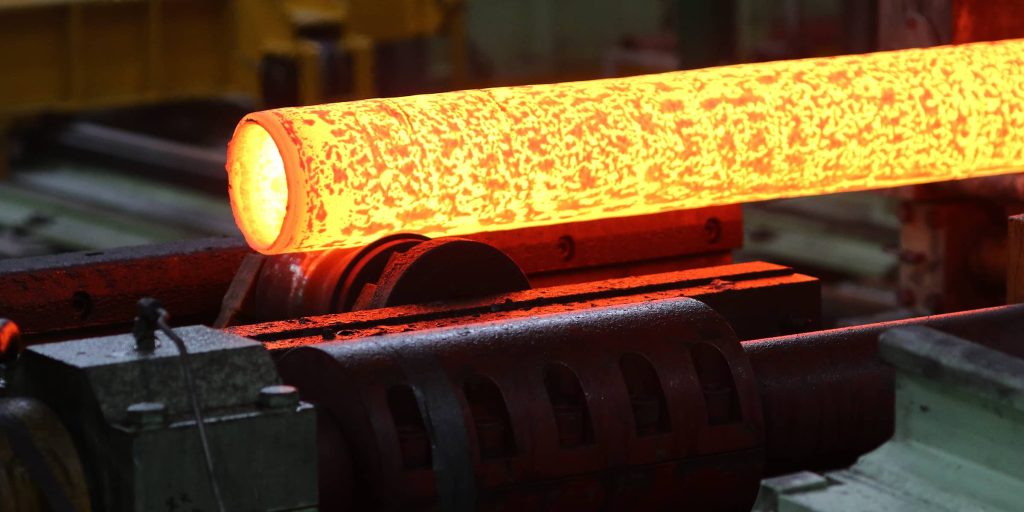
ASTM A213
ASTM A213 is an important standard developed by the American Society for Materials and Testing (ASTM). The ASTM A213 standard focuses on seamless ferritic and austenitic alloy steel boiler, superheater and heat exchanger tubes under high pressure and temperature.
ASTM A213 standard tubing is manufactured in a seamless process with excellent corrosion resistance and strength. The most common materials are alloy steel pipes and stainless steel pipes.
ASTM A213 contains a variety of steel grades to facilitate applications in different environments. Some of the common grades are: ASTM A212 Grade T2/ T5/ T9/ T11/ T22/ T91. The main difference between these grades is the chromium and molybdenum content, with the lower grades having lower oxidation and high temperature resistance. T91 consists of 9 per cent chromium and 1 per cent molybdenum, with traces of vanadium and tungsten, and is ideally suited to supercritical boiler applications.
Steel Grade of ASTM A213
The ASTM A213 standard has different chemical composition and performance requirements for each grade.
| Standard | ASTM A213/ A213M | |||||
| Procedure | SMLS | |||||
| Dimensions | 3.2-127mm | |||||
| 1/8″ – 5″ | ||||||
| Thickness | 0.4-12.7mm | |||||
| Unit Length | 3 – 18 mtrs | |||||
| Steel Grade | T2 | T11 | T23 | T112 | TP304L | TP316H |
| T5 | T12 | T24 | T911 | TP304H | TP316Ti | |
| T5b | T17 | T36 | TP201 | …… | TP316N | |
| T5c | T21 | T91 | TP202 | TP316 | …… | |
| T9 | T22 | T92 | TP304 | TP316L | – | |
| Surface Coating | Black lacquer coating,Varnishing, Oiling, Hot Dip Galvanizing | |||||
| FBE, 2PP, 3PP, 2PE, 3PE | ||||||
| End Type | Plain, Bevelled, Threaded, Grooved,Shouldered | |||||
| Joint Method | Fitting, Flange, Coupling, Clamp, Pipe Shoulder, Welding | |||||
| Pipe Machining | Welding, Bending, Hole Drilling, Punching, Swaging, Tapering, Flaring, Expanding | |||||
DIMENSIONS AND SIZES OF ASTM A213 PIPE
The ASTM A213 standard has a very comprehensive size range. Inside diameters range from 1/8 inch (3.2 mm) to 5 inches (127 mm), while minimum wall thicknesses range from 0.015 inches (0.4 mm) to 0.500 inches (12.7 mm).
The ASTM A213 standard strictly controls these size ranges of tubing, ensuring that the tubing produced can be accurately and perfectly adapted for both sophisticated components and large-scale project applications.
| Outside Diameter: | 1⁄8 to 5 in. [3.2 to 127 mm] |
|---|---|
| Wall Thickness: | 0.015 to 0.500 in. [0.4 to 12.7 mm] |
| Tubing having other dimensions may be furnished, provided such tubes comply with all other requirements of this specification. | |
CHEMICAL COMPOSITION REQUIREMENT OF ASTM A213 PIPE
The ASTM A213 standard has very strict requirements for chemical composition. The content and proportion of each chemical element will directly affect the final performance of the steel pipe.
- Carbon (C) : Usually between 0.05% and 0.12%. It affects the strength and hardness of steel.
- Chromium (Cr) : The chromium content in ASTM A213 tubing is generally 1% to 12%. The high temperature resistance and oxidation resistance of steel are affected.
- Molybdenum (Mo) : Generally between 0.25% and 1%. It affects the high temperature strength and creep resistance of steel.
- Manganese (Mn) : Usually 0.30% to 0.60%. It affects the strength and hardness of steel and improves its wear resistance.
- Silicon (Si) : Generally between 0.20% and 0.50%. It affects the strength and hardness of steel.
| Grade | UNS Designation | Composition,% | ||||||||||||||
|---|---|---|---|---|---|---|---|---|---|---|---|---|---|---|---|---|
| Carbon | Manganese | Phosphorus | Sulfur | Silicon | Nickel | Chromium | Molybdenum | Vanadium | Boron | Niobium | Nitrogen | Aluminum | Tungsten | Other Elements | ||
| T2 | K11547 | 0.10-0.20 | 0.30-0.61 | 0.025 | 0.025 | 0.10-0.30 | … | 0.50-0.81 | 0.44-0.65 | … | … | … | … | … | … | … |
| T5 | K41545 | 0.15 | 0.30-0.60 | 0.025 | 0.025 | 0.5 | … | 4.00-6.00 | 0.45-0.65 | … | … | … | … | … | … | … |
| T5b | K51545 | 0.15 | 0.30-0.60 | 0.025 | 0.025 | 1.00-2.00 | … | 4.00-6.00 | 0.45-0.65 | … | … | … | … | … | … | … |
| T5c | K41245 | 0.12 | 0.30-0.60 | 0.025 | 0.025 | 0.5 | … | 4.00-6.00 | 0.45-0.65 | … | … | … | … | … | … | Ti 4xC-0.70 |
| T9 | K90941 | 0.15 | 0.30-0.60 | 0.025 | 0.025 | 0.25-1.00 | … | 8.00-10.00 | 0.90-1.10 | … | … | … | … | … | … | … |
| T11 | K11597 | 0.05-0.15 | 0.30-0.60 | 0.025 | 0.025 | 0.50-1.00 | … | 1.00-1.50 | 0.44-0.65 | … | … | … | … | … | … | … |
| T12 | K11562 | 0.05-0.15 | 0.30-0.61 | 0.025 | 0.025 | 0.5 | … | 0.80-1.25 | 0.44-0.65 | … | … | … | … | … | … | … |
| T17 | K12047 | 0.15-0.25 | 0.30-0.61 | 0.025 | 0.025 | 0.15-0.35 | … | 0.80-1.25 | … | 0.15 | … | … | … | … | … | … |
| T21 | K31545 | 0.05-0.15 | 0.30-0.60 | 0.025 | 0.025 | 0.50-1.00 | … | 2.65-3.35 | 0.80-1.06 | … | … | … | … | … | … | … |
| T22 | K21590 | 0.05-0.15 | 0.30-0.60 | 0.025 | 0.025 | 0.5 | … | 1.90-2.60 | 0.87-1.13 | … | … | … | … | … | … | … |
| T23 | K40712 | 0.04-0.10 | 0.10-0.60 | 0.03 | 0.01 | 0.5 | … | 1.90-2.60 | 0.05-0.30 | 0.20-0.30 | 0.0005-0.006 | 0.02-0.08 | 0.03 | 0.03 | 1.45-1.75 | … |
| T24 | K30736 | 0.05-0.10 | 0.30-0.70 | 0.02 | 0.01 | 0.15-0.45 | … | 2.20-2.60 | 0.90-1.10 | 0.20-0.30 | 0.0015-0.007 | … | 0.012 | 0.02 | … | Ti 0.06-0.10 |
| T36 | K21001 | 0.10-0.17 | 0.80-1.20 | 0.03 | 0.025 | 0.25-0.50 | 1.00-1.30 | 0.3 | 0.25-0.50 | 0.02 | … | 0.015-0.045 | 0.02 | 0.05 | … | Cu 0.50-0.80 |
| T91 | K90901 | 0.07-0.14 | 0.30-0.60 | 0.02 | 0.01 | 0.20-0.50 | 0.4 | 8.0-9.5 | 0.85-1.05 | 0.18-0.25 | … | 0.06-0.1 | 0.030-0.070 | 0.02 | … | Ti 0.01 Zr 0.01 |
| T92 | K92460 | 0.07-0.13 | 0.30-0.60 | 0.02 | 0.01 | 0.5 | 0.4 | 8.5-9.5 | 0.30-0.60 | 0.15-0.25 | 0.001-0.006 | 0.04-0.09 | 0.030-0.070 | 0.02 | 1.5-2.00 | Ti 0.01 Zr 0.01 |
| T122 | K91271 | 0.07-0.14 | 0.7 | 0.02 | 0.01 | 0.5 | 0.5 | 10.0-11.5 | 0.25-0.60 | 0.15-0.30 | 0.0005-0.005 | 0.04-0.10 | 0.040-0.100 | 0.02 | 1.5-2.5 | Cu 0.30-1.70 Ti 0.01 Zr 0.01 |
| T911 | K91061 | 0.09-0.13 | 0.30-0.60 | 0.02 | 0.01 | 0.10-0.50 | 0.4 | 8.5-9.5 | 0.90-1.10 | 0.18-0.25 | 0.0003-0.006 | 0.06-0.10 | 0.040-0.090 | 0.02 | 0.9-1.1 | Ti 0.01 Zr 0.01 |
MECHANICAL PROPERTIES OF ASTM A213 PIPE
The ASTM A213 standard has clear requirements and regulations for the tensile strength, yield strength, elongation, etc.
- Tensile strength: Taking T11 as an example, its tensile strength should not be less than 415MPa. High tensile strength can make the steel pipe under high stress and load is not easy to fracture and deformation.
- Yield strength: Taking T11 as an example, its yield strength should not be less than 205MPa. The yield strength is generally treated by heat treatment processes such as quenching and tempering.
- Elongation: Taking T11 as an example, the elongation after breaking should not be less than 30%. The toughness and plasticity of the pipe were improved by optimizing the uniform and fine grain structure.
| Tensile Requirements-Low Alloy Steels | ||||
|---|---|---|---|---|
| Grade | UNS Designation | Tensile Strength | Yield Strength | Elongation in 2 in. or 50 mm, min, %AB |
| min, ksi [MPa] | min. ksi [MPa] | |||
| T5b | K51545 | 60[415] | 30[205] | 30 |
| T9 | K90941 | 60[415] | 30[205] | 30 |
| T12 | K11562 | 60[415] | 32[220] | 30 |
| T23 | K40712 | 74[510] | 58[400] | 20 |
| T24 | K30736 | 85[585] | 60[415] | 20 |
| T36 Class 1 | K21001 | 90[620] | 64[440] | 15 |
| T36 Class 2 | K21001 | 95.5[660] | 66.5[460] | 15 |
| T91 | K90901 | 85[585] | 60[415] | 20 |
| T92 | K92460 | 90[620] | 64[440] | 20 |
| T122 | K91271 | 90[620] | 58[400] | 20 |
| T911 | K91061 | 90[620] | 64[440] | 20 |
| All other low alloy grades | – | 60[415] | 30[205] | 30 |
APPLICATIONS OF ASTM A213
- Boiler piping: Commonly used in supercritical boilers and power plant boilers. ASTM A213 tubing ensures safe and efficient boiler operation.
- Heat exchangers: ASTM A213 tubing is commonly used to make tube bundles for heat exchangers.
- Petroleum Cracking furnaces: ASTM A213 High temperature reactor piping systems are designed to withstand high temperatures and corrosive environments.
- Metallurgical equipment: such as coolers and heat exchangers,ASTM A213 tubing also maintains good mechanical properties at high temperatures.
TUSPIPE Steel Tube Manufacturer, with three complete tube production lines, produces steel tubes not only for boiler piping industry but also for a wide range of applications:
- Construction Industry
- Oil and Gas Steel Pipe
- Water Treatment Industry
- Industrial Manufacturing
- Agriculture Pipe
- Ocean Ships Industry
- Mechanical Processing
- Energy Transportation
TUSPIPE is known for its high quality, so be sure to get the pipe you need!
1. What Is the Difference between ASTM A269 and A213?
- ASTM A269 is suitable for piping systems requiring high corrosion resistance. A269 covers austenitic stainless steels but excludes ferritic alloy steels.
- ASTM A213 is the standard for boiler tubes, addressing ferritic alloy steels and austenitic stainless steels in high-pressure environments.
2. What Is the Equivalent of ASTM A213 T11?
ASTM A213 T11 is a typical low-alloy, high-strength heat-resistant steel.
Its equivalent materials include JIS STBA22 / STPA22, ASTM A335 Grade P11, EN 10216-2 Grade T11, etc.
3. What Material Is A213 TP304?
ASTM A213 TP304 is an austenitic stainless steel. The letters TP denote its type. Its carbon content is ≤ 0.08%. Chromium content of 18.0–20.0% enhances the material’s corrosion resistance and oxidation resistance.