Boiler Tubes- Fire,Water Boiler Pipes Suppliers
TUSPIPE offers boiler tubes with optimal welding and seamless construction. Our boiler tubes are certified to EN 10217-2, GB 5310, ASME SA-192, and SA-213 standards. Ensure that the boiler tubes you receive can operate stably in harsh environments.
Boiler Tubes
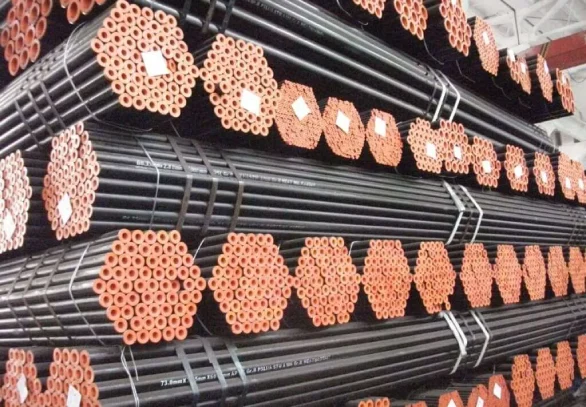
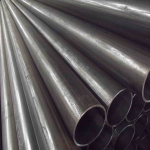
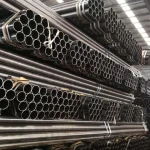
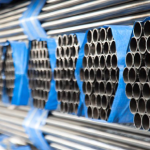
A boiler tubes is a type of pipe that is used within boilers to heat water to produce steam. These Boiler pipes are classified into two different types:medium pressure pipes and / high pressure pipes. Boiler tubes are welded and made from steel, which makes them resistant to many different types of wear and tear. In addition, these boiler pipes have a seam that runs along their length, which helps to prevent leaks.
TUSPIPE’s Boiler tubes are extensively used in a variety of industries, such as heat exchanger pipe and tubing services, tube exchanger bundles, high-pressure boilers, economizers, superheaters, and petrochemical industry pipes. These pipes play an essential role in the overall function of these systems.
Boiler Tube Introduction
Our boiler tubes
- We strictly adhere to international standards: ASME (American Standard): SA-192 (carbon steel water pipe), SA-213 (alloy steel pipe);
EN (European Standard): EN 10216-2 (seamless steel pipe), EN 10217-2 (welded pipe);
National Standard: GB 5310 (seamless steel pipe for high-pressure boilers); - Processing options: Hot-rolled seamless, cold-drawn seamless, and ERW (Electromechanical Welding)
- Pressure Capacity: Hot-rolled seamless >80 MPa; cold-drawn seamless 60-80 MPa; ERW (Electromechanical Welding) ≤40 MPa.
- Coatings: Aluminized coating, nickel-based alloy, nickel-based alloy, tungsten carbide coating, metal-ceramic composite coating, etc.
- Temperature Adaptability: ≤400°C: epoxy resin coating; 400-600°C: ferrite alloy coating; >600°C: ceramic/nickel-based coating. Wall Thickness Tolerance: Accurate to ±5%
Boiler Tube Types: Evaporator Tubes, Superheater Tubes, Economizer Tubes, Water Boiler Tubes, Fire Boiler Tubes
water Boiler Tube and fire boiler tubes
Tube boilers are broadly classified into two categories: water-tube boilers and fire-tube boilers.
Water circulates inside the tubes of a water-tube boiler and is heated outside by hot gases created by the furnace. With fire-tube boilers, hot gas travels through one or more tubes, heating the water surrounding them by thermal conduction.
Two types of boiler tubes transportation objects are different, but the overall test of the boiler tube’s high temperature resistance/high pressure resistance and corrosion resistance.
High temperature resistance: especially fire boiler tube, the temperature can reach hundreds of degrees or even higher, so then this environment, to ensure that the performance of the pipe will not change, the strength will not decline, can not produce cracks.
High-pressure resistance: boiler tubes in the work, in order to improve efficiency, often transported objects pressurized, which leads to the boiler tube must have sufficient high-pressure resistance. Guarantee that the pipe will not rupture and explode after the re-transported objects are pressurized.
Corrosion resistance: boiler tubes will be exposed to different environments, these substances will make the boiler pipe itself chemical properties change, especially water boiler tube may be scaling. So the boiler tube must have good corrosion resistance.
Medium-Pressure Boiler Tube and High-Pressure Boiler Tube
Depending on the operating temperature, either a medium-pressure or a high-pressure boiler pipe shall be utilized. Typically classed as follows:
- The normal operating temperature of the boiler pipe is less than 450°C. The procedure of hot rolling or cold drawing is mostly used to manufacture the medium-pressure boiler pipeline.
- High-pressure boiler pipes are frequently utilized under extreme temperatures and pressures. The pipe will oxidize and corrode as a result of the high-temperature flue gas and steam. It is necessary for a high-pressure boiler tube to have high tensile strength, high resistance to oxidation corrosion, and superior tissue stability.
Dimension and Sizes of Boiler Tube
| DN | O.D. | W.T. | |||||||||||||||
|---|---|---|---|---|---|---|---|---|---|---|---|---|---|---|---|---|---|
| Inch | mm | SCH5S | SCH10S | SCH10 | SCH20 | SCH30 | SCH40 | SCH60 | SCH80 | SCH100 | SCH120 | SCH140 | SCH160 | Sth | XS | XXS | |
| 50 | 2″ | 60.3 | 1.65 | 2.77 | – | – | – | 3.91 | – | 5.54 | – | – | – | 8.74 | 3.91 | 5.54 | 11.07 |
| 65 | 2 1/2″ | 73 | 2.11 | 3.05 | – | – | – | 5.16 | – | 7.01 | – | – | – | 9.53 | 5.16 | 7.01 | 14.02 |
| 80 | 3″ | 88.9 | 2.11 | 3.05 | – | – | – | 5.49 | – | 7.62 | – | – | – | 11.13 | 5.49 | 7.52 | 15.24 |
| 90 | 3 1/2″ | 101.6 | 2.11 | 3.05 | – | – | – | 5.74 | – | 8.08 | – | – | – | – | 5.74 | 8.08 | – |
| 100 | 4″ | 114.3 | 2.11 | 3.05 | – | – | – | 6.02 | – | 8.58 | – | 11.13 | – | 13.49 | 6.02 | 8.56 | 17.12 |
| 125 | 5″ | 141.3 | 2.77 | 3.4 | – | – | – | 6.55 | – | 9.53 | – | 12.7 | – | 15.88 | 6.55 | 9.53 | 18.05 |
| 150 | 6″ | 168.3 | 2.77 | 3.4 | – | – | – | 7.11 | – | 10.97 | – | 14.27 | – | 18.26 | 7.11 | 10.97 | 21.95 |
| 200 | 8″ | 219.1 | 2.77 | 3.76 | – | 6.35 | 7.04 | 8.18 | 10.31 | 12.7 | 15.09 | 18.26 | 20.62 | 23.01 | 8.18 | 12.7 | 22.23 |
| 250 | 10″ | 273.1 | 3.4 | 4.19 | – | 6.35 | 7.8 | 9.27 | 12.7 | 15.09 | 18.26 | 21.44 | 25.4 | 28.58 | 9.27 | 12.7 | 25.4 |
| 300 | 12″ | 323.9 | 3.96 | 4.57 | – | 6.35 | 8.38 | 10.31 | 14.27 | 17.48 | 21.44 | 25.4 | 28.58 | 33.32 | 9.53 | 12.7 | 25.4 |
| 350 | 14″ | 355.5 | 3.96 | 4.78 | 6.35 | 7.92 | 9.53 | 11.13 | 15.09 | 19.05 | 23.83 | 27.79 | 31.75 | 35.71 | 9.53 | 12.7 | – |
| 400 | 16″ | 406.4 | 4.19 | 4.78 | 6.35 | 7.92 | 9.53 | 12.7 | 16.66 | 21.44 | 26.19 | 30.96 | 36.53 | 40.49 | 9.53 | 12.7 | – |
| 450 | 18″ | 457.2 | 4.19 | 4.78 | 6.35 | 7.92 | 11.13 | 14.27 | 19.05 | 23.83 | 39.36 | 34.93 | 39.67 | 45.24 | – | – | – |
| 500 | 20″ | 508 | 4.78 | 5.54 | 6.35 | 9.53 | 12.7 | 15.09 | 20.62 | 26.19 | 32.54 | 38.1 | 44.45 | 50.01 | – | – | – |
| 550 | 22″ | 558.8 | 4.78 | 5.54 | 6.35 | 9.53 | 12.7 | – | 22.23 | 28.58 | 34.93 | 41.28 | 47.63 | 53.98 | – | – | – |
| 600 | 24″ | 609.6 | 5.54 | 6.35 | 6.35 | 9.53 | 14.27 | 17.48 | 24.61 | 30.96 | 38.89 | 46.02 | 52.37 | 59.54 | – | – | – |
How to Control the quality of Boiler tube
Boiler tubes and pipes are highly sought after due to their ability to withstand extremely demanding operating conditions while maintaining operational reliability. We maintain stringent quality control throughout the manufacturing process, from steelmaking to tube and boiler tube fabrication, and have devised the following quality assurance system.boiler
- Independence of the Quality Assurance Department
The quality assurance department is distinct from the manufacturing department and is charged with primary authority and responsibility for quality in order to ensure it(bolier tube).
- Standardization of Tasks
Numerous manufacturing and quality-related tasks are standardized and recorded in order to facilitate unification.
- Adoption of an inspector qualification system
Numerous manufacturing and quality-related tasks are standardized and recorded in order to facilitate their integration.
- Full adoption of nondestructive tests
Numerous mandatory tests and inspections are carried out according to application, and all items undergo nondestructive testing during final inspection.
- Establishment of periodic gauges and tester calibration systems
Numerous gauges and testers are calibrated on a regular basis to assure quality inspection.
SELECTION OF BOILER TUBE SIZE NEED TO CONSIDER
- Boiler capacity and power: In order to ensure the flow of steam, the pressure pipe diameter and wall thickness of the boiler tube will also increase accordingly.
- Medium properties: Different media have different density, viscosity and corrosiveness.
- Working pressure and temperature: under high temperature and high pressure environment, oxidation and creep are easy to occur. Therefore, it is necessary to choose a boiler tube with a larger diameter and wall thickness.
- Manufacturing process and materials: It is necessary to select and determine the appropriate size range of pipes according to different manufacturing processes and materials, and determine the strength, toughness and other mechanical properties of pipes.
Three Steps to Choose High Quality Boiler Tube
While selecting boiler tubes, keep the following in mind to ensure that you are purchasing the correct and highest-quality boiler tubes:
- Examine the tube’s cross-section. A seamless boiler tube of high quality will have a smooth cross-section and be free of bumps and imperfections.
- Determine the boiler tube’s density to determine the percentage of contaminants in the boiler tube. Avoid pipes with a low density!
- Inspect the boiler tube’s outside. A smooth surface is a sign of a high-quality boiler tube. If the surface is rough and uneven, you can be certain that the quality is lacking.
Features of Boiler Tube
Boiler tubes and pipes necessitate exceptionally high quality as well as a wide range of steel grades and dimensions suitable for various applications.
As a backdrop, our boiler tubes and pipes have developed from a secure system through years of experience and the foremost engineering process to fully meet these standards.
They boiler tube are produced using an integrated production system, as well as tight quality design and quality control from raw materials to finished products.
In response to changing needs, we are producing new materials and products, as well as performing extensive research and development, including manufacturing process research.

Why choose tuspipe?

Since 1998, Tianjin United Steel Piping Co., Ltd (TUSPIPE) has been committed to supplying high-quality line pipes.
With over 500,000 tons annual production capacity, the company serves various fields and industries, such as oil & gas exploitation and transmission, ship & auto-building, water & electricity, environmental protection, mechanical engineering, infrastructure construction and etc.
TUSPIPE places a premium on product quality and rigorous product quality control. In order to maintain good product quality, the company has established a Test & Inspection Center since 2004. With a series of state-of-the-art tests and inspection equipment, the test & inspection center is able to perform the tensile tests, hydro tests, impact tests, DWTT, etc.