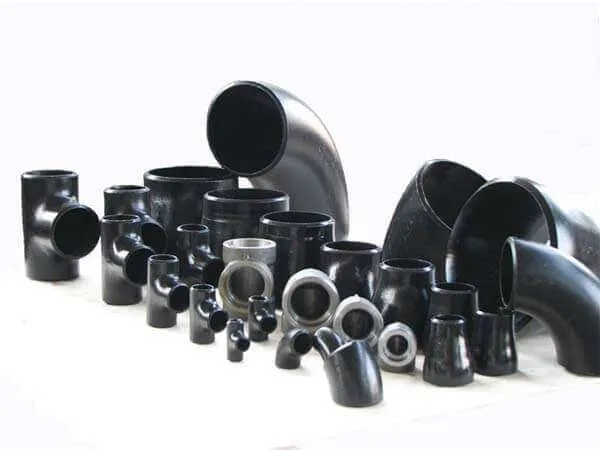
PRESSURE PipeS
TUSPIPE provides pressure pipes compliant with standards such as ASTM A53, EN 10255, EN 10217-1, JIS G3452, and AS/NZS 1074. Size range from DN50 to DN600. Pressure steel pipes come in a wide range of sizes. We also offer galvanized pressure pipes and fused epoxy coating pressure pipes. Ensuring the longest service life for your projects.
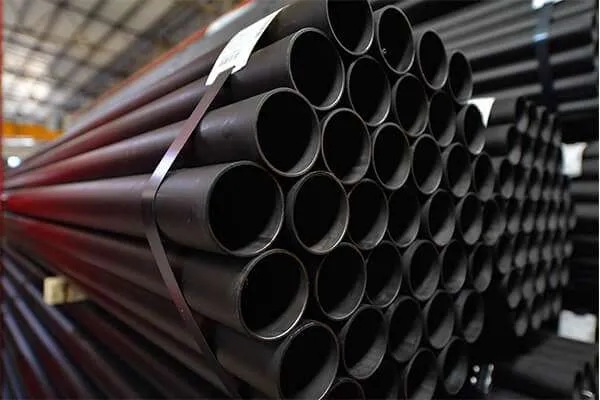
Pressure Pipes
A pressure pipe is an underground pipe that transports liquids and gases under high pressure by using a certain pressure. Common applications for pressure pipes include steam and water mains, gas mains, and oil pipes. The pressure pipe is usually made of steel as the raw material and uses specialized technology to connect the fittings.
In order to ensure the safety and reliability of the pipeline, the pressure pipeline needs to be inspected regularly to test for leakage and corrosion. By understanding pressure piping systems, engineers can safely transport liquids and gases underground without having to worry about pipe leaks or bursts.
Why choose tuspipe?

Since 1998, Tianjin United Steel Piping Co., Ltd (TUSPIPE) has been committed to supplying high-quality line pipes.
With over 500,000 tons annual production capacity, the company serves various fields and industries, such as oil & gas exploitation and transmission, ship & auto-building, water & electricity, environmental protection, mechanical engineering, infrastructure construction and etc.
TUSPIPE places a premium on product quality and rigorous product quality control. In order to maintain good product quality, the company has established a Test & Inspection Center since 2004. With a series of state-of-the-art tests and inspection equipment, the test & inspection center is able to perform the tensile tests, hydro tests, impact tests, DWTT, etc.
Dimensions and Sizes of Pressure Pipe
The choice of the size and dimension of the pressure pipe directly affects the safety, efficiency and maintenance cost of the system. When choosing the size of the pipeline, it is necessary to carefully consider the pipeline flow rate, pressure grade and economic factors.
| DN | O. D. | W. T. | |||||||||||||||
|---|---|---|---|---|---|---|---|---|---|---|---|---|---|---|---|---|---|
| Inch | mm | SCH5S | SCH10S | SCH10 | SCH20 | SCH30 | SCH40 | SCH60 | SCH80 | SCH100 | SCH120 | SCH140 | SCH160 | Sth | XS | XXS | |
| 50 | 2″ | 60.3 | 1.65 | 2.77 | – | – | – | 3.91 | – | 5.54 | – | – | – | 8.74 | 3.91 | 5.54 | 11.07 |
| 65 | 2 1/2″ | 73 | 2.11 | 3.05 | – | – | – | 5.16 | – | 7.01 | – | – | – | 9.53 | 5.16 | 7.01 | 14.02 |
| 80 | 3″ | 88.9 | 2.11 | 3.05 | – | – | – | 5.49 | – | 7.62 | – | – | – | 11.13 | 5.49 | 7.52 | 15.24 |
| 90 | 3 1/2″ | 101.6 | 2.11 | 3.05 | – | – | – | 5.74 | – | 8.08 | – | – | – | – | 5.74 | 8.08 | – |
| 100 | 4″ | 114.3 | 2.11 | 3.05 | – | – | – | 6.02 | – | 8.58 | – | 11.13 | – | 13.49 | 6.02 | 8.56 | 17.12 |
| 125 | 5″ | 141.3 | 2.77 | 3.4 | – | – | – | 6.55 | – | 9.53 | – | 12.7 | – | 15.88 | 6.55 | 9.53 | 18.05 |
| 150 | 6″ | 168.3 | 2.77 | 3.4 | – | – | – | 7.11 | – | 10.97 | – | 14.27 | – | 18.26 | 7.11 | 10.97 | 21.95 |
| 200 | 8″ | 219.1 | 2.77 | 3.76 | – | 6.35 | 7.04 | 8.18 | 10.31 | 12.7 | 15.09 | 18.26 | 20.62 | 23.01 | 8.18 | 12.7 | 22.23 |
| 250 | 10″ | 273.1 | 3.4 | 4.19 | – | 6.35 | 7.8 | 9.27 | 12.7 | 15.09 | 18.26 | 21.44 | 25.4 | 28.58 | 9.27 | 12.7 | 25.4 |
| 300 | 12″ | 323.9 | 3.96 | 4.57 | – | 6.35 | 8.38 | 10.31 | 14.27 | 17.48 | 21.44 | 25.4 | 28.58 | 33.32 | 9.53 | 12.7 | 25.4 |
| 350 | 14″ | 355.5 | 3.96 | 4.78 | 6.35 | 7.92 | 9.53 | 11.13 | 15.09 | 19.05 | 23.83 | 27.79 | 31.75 | 35.71 | 9.53 | 12.7 | – |
| 400 | 16″ | 406.4 | 4.19 | 4.78 | 6.35 | 7.92 | 9.53 | 12.7 | 16.66 | 21.44 | 26.19 | 30.96 | 36.53 | 40.49 | 9.53 | 12.7 | – |
| 450 | 18″ | 457.2 | 4.19 | 4.78 | 6.35 | 7.92 | 11.13 | 14.27 | 19.05 | 23.83 | 39.36 | 34.93 | 39.67 | 45.24 | – | – | – |
| 500 | 20″ | 508 | 4.78 | 5.54 | 6.35 | 9.53 | 12.7 | 15.09 | 20.62 | 26.19 | 32.54 | 38.1 | 44.45 | 50.01 | – | – | – |
| 550 | 22″ | 558.8 | 4.78 | 5.54 | 6.35 | 9.53 | 12.7 | – | 22.23 | 28.58 | 34.93 | 41.28 | 47.63 | 53.98 | – | – | – |
| 600 | 24″ | 609.6 | 5.54 | 6.35 | 6.35 | 9.53 | 14.27 | 17.48 | 24.61 | 30.96 | 38.89 | 46.02 | 52.37 | 59.54 | – | – | – |
PRESSURE PIPE COATING
Coatings on both the external and internal surfaces extend the life of steel pressure pipes.
- External Coating of Pressure Pipes
| Pressure Pipe Property | Typical Values |
|---|---|
| Density grade | HDPE (High-density polyethene) |
| Thickness, mm | > 2,2 (DN 400 – 450) |
| > 2,5 (DN 500 – 750) | |
| > 3,0 (DN 800 – 1200) | |
| Increased thickness + 0,7 | |
| Bond strength at +20 ⁰C, N/cm | > 120 |
| Impact resistance, J/mm | > 5 |
| Identation at +23 ⁰C, mm | < 0.2 |
| Breaking elongation, % | > 400 |
| Specific resistance, Ωm2 | > 108 |
| Thermal ageing, % | < 35 |
| Light ageing, % | < 35 |
| Cathodic disbonding, 30 days, mm | < 5 |
| Ambient temperature, ⁰C | – 40 to +80 |
- Internal Cement Mortal Lining of Pressure Pipes
| Pressure Pipe Property | Typical Values |
|---|---|
| Thickness, mm | 8 ± 2 (DN 400 – 600) |
| 10 ± 3 (DN 650 – 900) | |
| 12 ± 2 (DN 950 – 1200) | |
| Flexural tensile strength, N/mm2 | > 5 |
| Compressive strength, N/mm2 | > 50 |
- Zinc Coating of Pressure Pipes
Galvanizing of pressure pipelines as a surface treatment for corrosion protection is cost-effective and widely used. It is critical to the corrosion resistance and safety of pressure piping. Hot dip galvanizing involves immersing clean pressure piping in a molten zinc solution, which chemically reacts with the surface of the piping to form a homogeneous and dense zinc-iron alloy and pure zinc overlay.
production standard of pressure Pipe
ASTM A53 is a standard specification developed by the American Society for Testing and Materials (ASTM) for welded and seamless carbon steel tubing. The ASTM A53 seamless tubing is available in Grades A and B.
EN 10255 is a key standard developed by the European Organization for Standardization (CEN) to regulate the manufacture and quality of non-alloy steel tubes.
EN 10217-1 is a general standard for non-alloy and alloy steel tubes and pipes developed by the European Organization for Standardization (CEN).
JIS G3452 is a Japanese Industrial Standard for the specification of common steel tubes (mainly welded steel tubes). It is used in the construction and machinery industries.
AS/NZS 1074 is an Australian/New Zealand standard for steel pipes and tubes used in the transportation of fluids such as water and gas.
Features of Pressure Pipe Coating
- Thickness Requirements for Pressure Pipe Anti-corrosion Coating
| Nominal Diameter | Epoxy Coating/μm | Adhesive Coating/μm | Min. Thickness of PE Coating | |
|---|---|---|---|---|
| Common (mm) | Enhanced (mm) | |||
| DN≤100 | ≥120 | ≥170 | 1.8 | 2.5 |
| 100<DN≤250 | 2 | 2.7 | ||
| 250<DN≤500 | 2.2 | 2.9 | ||
| 500<DN≤850 | 2.5 | 3.2 | ||
| DN≥800 | 3 | 3.7 | ||
- Performance Index of Fused Epoxy Coating
| No. | Item | Performance Indicators |
|---|---|---|
| 1 | Adhesion, Classification | ≤2 |
| 2 | Cathode Racking (65℃,48h)/mm | Racking Distance ≤8 |
| 3 | Cathode Racking (65℃,30d)/mm | Racking Distance ≤15 |
| 4 | Anti-bending (-20℃,2.5°) | No Crack |
- Performance Index of Two-Layer Structure Adhesive
| No. | Item | Performance Indicators |
|---|---|---|
| 1 | Density (g/cm²) | 0.920 – 0.950 |
| 2 | Melt Flow Rate (190℃,2.16kg)(g/10min) | ≥0.7 |
| 3 | Vicat Softening (℃) | ≥90 |
| 4 | Brittle Temperature (℃) | ≤-50 |
| 5 | Oxidation Induction Time (200℃) | ≥10 |
| 6 | Moisture Content % | ≤0.1 |
| 7 | Tensile Strength Mpa | ≥17 |
| 8 | Elongation after Fracture % | ≥600 |
- Performance Index of Two-Layer Structure Adhesive
| No. | Item | Performance Indicators | |
|---|---|---|---|
| 1 | Tensile Strength | Axial Direction, Mpa | ≥20 |
| Circumferential Direction, Mpa | ≥20 | ||
| Deviation, % | ≤15 | ||
| 2 | Elongation after Fracture, % | ≥600 | |
| 3 | Indentation Hardness (mm) | 23℃ | ≤0.2 |
| 50℃ or 70℃ | ≤0.3 | ||
| 4 | Endurably Environmental Stress Cracking (F50),h | ≥1000 | |
Types OF Pressure Pipe Coating
- Fusion Bonded Epoxy (FBE) Coating
Fusion Bonded Epoxy (FBE) coatings are thermal based powder coatings made of epoxy resin, which are applied to the metal surface by electrostatic coating technology because the molecular structure of this coating contains highly polar and active epoxy groups. It can produce a uniform and strong protective layer under high temperature conditions, which is widely adopted in metal pipes and valves and other equipment to implement anti-corrosion measures.
- Three Layers Polyethylene (3PE) Coating
Three-layer polyethylene (3PE) coatings are widely recognized for their superior corrosion resistance. It is often used in marine conditions and the harsh environment of chemical pipelines. It provides reliable protection and maintenance for pipelines. The base layer of the three-layer polyethylene (3PE) coating is constructed from epoxy powder (FBE) or a specific adhesive. A copolymer bonding material makes up the middle layer. The outermost layer is based on polyvinyl chloride. The three-layer structure is highly synergistic, thus effectively avoiding the corrosive effects of the outside world on the pipe.
- Three Layers Polypropylene (3PP) Coating
3PP coating is a three-layer polypropylene anticorrosive coating that consists of a base layer of epoxy powder, an intermediate layer of binder, and an outer layer of polypropylene (PP) jacket. The primer layer provides a good adhesion base. The intermediate layer is the core part of the 3PP coating. The top paint layer mainly provides aesthetics, wear resistance and so on.
- Epoxy Coal Pitch Anticorrosion Coating
Epoxy coal pitch anticorrosion coating is composed of epoxy coal pitch anticorrosion coating and curing agent. Excellent corrosion resistance. At the same time, Epoxy coal pitch anticorrosion coating has good weather resistance and wear resistance, epoxy coal pitch anticorrosion coating will form a strong and ductile protective layer after high temperature curing. It is widely used in oil and gas, Bridges, docks and other infrastructure anticorrosion.
- Silicone Anticorrosion Coating
Silicone Anticorrosion Coating is a polymer coated with silicone anticorrosion coating, which is formed by alternating connection of polysiloxane, silicon atoms and oxygen atoms into main chain and organic side chain. This compound has extremely high chemical stability and can resist the corrosion of acid, alkali and salt media. Excellent stability and corrosion resistance. And high temperature and high pressure resistance, the working temperature can reach 600°C. Often used in Bridges, wind power tower and petrochemical equipment.
- Internal Coating
The internal coating technology not only enhances the corrosion resistance of the equipment surface, but also enhances the lubricity and reduces the fluid resistance. It is widely used in food and beverage, pharmaceutical manufacturing, water treatment and other fields. There are many kinds of internal coatings. For example, epoxy coatings are suitable for acid-base medium environments. Polytetrafluoroethylene (PTFE) coatings are suitable for low-friction, non-stick surfaces.
Advantages Of Pressure Pipes & Fittings
Pressure pipes can efficiently transport fluids under pressure, significantly improving production efficiency, reducing costs, and facilitating transportation. It has strong pressure resistance and corrosion resistance. Pressure pipes are usually made of corrosion-resistant materials, such as stainless steel, alloy steel, etc. In the field of oil and gas, it can also withstand huge loads and pressures. Effectively prevent leakage accidents. The connection of pressure pipe fittings is stable and reliable. Strong adaptability, can be applied to a variety of media environments and conditions. Very flexible and reliable.