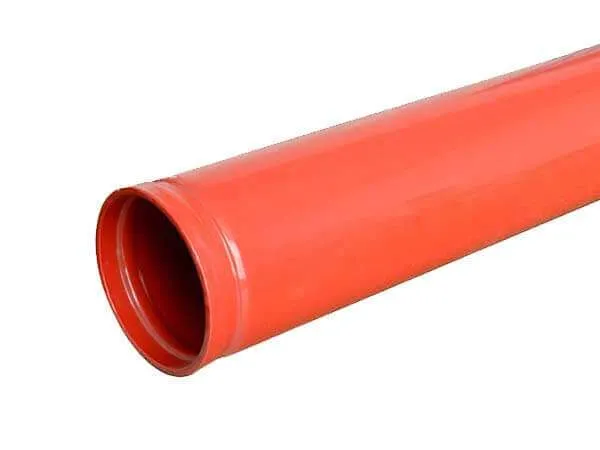
fm 1630-industrial pipe&sprinkler pipe
TUSPIPE manufactures industrial and sprinkler piping that is FM 1630 certified. This carbon steel pipe is available in various connection types and sizes. FM 1630 piping undergoes rigorous testing to ensure its stability and efficiency.
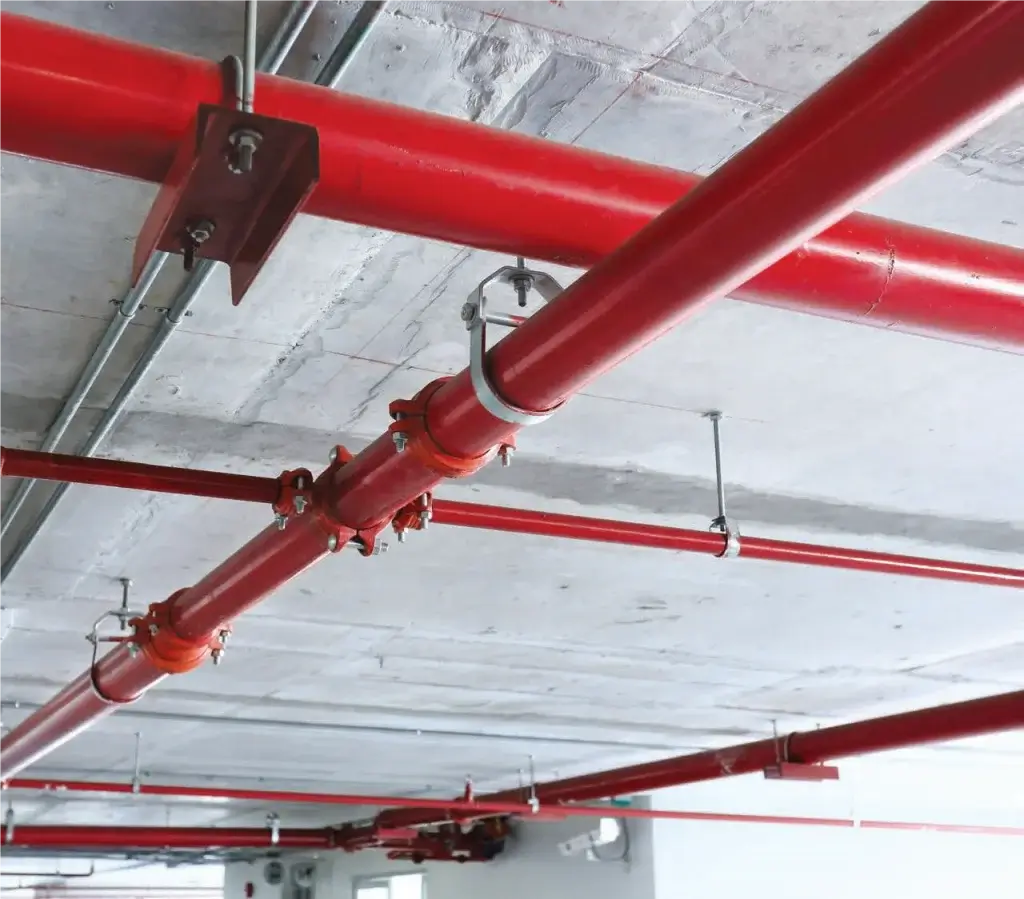
FM 1630
FM 1630 pipe is a type of pipe that is specifically designed for fire fighting applications, especially for aboveground fire sprinkler systems. The material used in the pipe can resist high temperatures and pressures, making it ideal for use in fire sprinkler systems.
FM 1630 pipe for fire fighting is also tested to ensure that it meets strict safety standards. As a result, this type of pipe is often used in commercial and industrial buildings where fire safety is a top priority. While FM 1630 pipe for fire fighting is more expensive than standard fire sprinkler pipe, the added safety and durability make it a wise investment for any property owner.
Scope of FM Approval
FM approved fire production pipe applies to a steel pipe that has been furnace welded, continuous butt-weld, or electric resistance welded. Other production processes, such as spiral welded or seamless pipe, may be assessed under this Standard if the objective of the Standard is satisfied.
This Approval Standard applies to “Specialty Tubulars” used with mechanical press connectors. When made in carbon steel, these “Specialty Tubulars” are restricted to diameters NPS 1 through 2, and NPS 1 through 4 when manufactured in stainless steel.
FM 1630 Pipe Technical Parameters
FM 1630 pipe is a type of pipe that is specifically designed for fire sprinkler systems. It is commonly made from steel or iron and is available in a variety of sizes and shapes. The most common coatings for fire production pipes are galvanizing, FBE, and varnish coatings. The most common colors for fire production pipes are red, orange, and zinc silver.
The thickness of the coating ranges from 250μm to 550μm. The working temperature range for fire sprinkler pipes is -30℃ to 80℃ (-22℉ to 176℉). The working pressure range for fire sprinkler pipe is 0.1 ~ 0.25 Mpa. The connection types for fire sprinkler pipe include welding joint, threaded, grooved, and flanged.
Welding joints are strong and secure, but they require special equipment and training to create. Threaded connections are easy to create and can be disassembled if necessary, but they are not as strong as welding joints. Grooved connections are similar to threaded connections, but they provide a better seal against leaks. Flanged connections are the strongest type of connection, but they are also the most difficult to create. Ultimately, the best connection for a given application will depend on the requirements of the job.
Marking of fire production Pipe
Each length of FM 1630 pipe for fire fighting shall be marked with the following information: manufacturer name, nominal pipe sizes and length, schedule or model reference, working pressure, heat number, FM approval certification mark, and steel grade.
This information is essential in determining the appropriate pipe for a particular application. The name of the manufacturer can help to identify the source of the fire production pipe, while the nominal pipe size and length can help to determine whether the fire production pipe will fit the required space. The schedule or model reference can provide information on the thickness of the pipe wall, while the working pressure can help to determine the maximum pressure that can be safely applied to the pipe. The heat number can help to identify the batch of steel from which the fire production pipe was made. Finally, the steel grade can help identify the pipe’s strength and durability
Different Connection Types of FM Approval Pipes
FM 1630 Pipes for fire fighting have four main connection types: welding joint, threaded, grooved, and flanged. Each type has its own benefits and drawbacks that should be considered when making a decision about what type of connection to use.
Welding joints are the strongest type of connection, but they require access to both sides of the joint in order to weld it correctly. This can make welding joints difficult to use in some situations. Threaded connections are much easier to create, but they may not be as strong as welding joints. Grooved connections are created by using a groove around the circumference of the pipe that is being connected.
This helps to create a stronger connection, but it can be more difficult to align the pipes correctly before welding them together. Flanged connections are made by attaching a flange to the end of each pipe that is being connected. This helps to provide more stability and prevents the fire production pipes from slipping out of alignment. Flanged connections are often used in situations where there is high pressure or where the pipes need to be able to move slightly without disconnecting.
Dimensions and Sizes of fire production Pipe
| N.D. | O.D. | SCH 10 | SCH 30/40 | ||||||||
|---|---|---|---|---|---|---|---|---|---|---|---|
| WALL THICKNESS | NOMINAL WEIGHT | WALL THICKNESS | NOMINAL WEIGHT | ||||||||
| (mm) | (Inch) | (mm) | (Inch) | (mm) | (Inch) | (kg/mtrs) | (lbs/ft) | (mm) | (Inch) | (kg/mtrs) | (lbs/ft) |
| 15 | 1/2 | 21.3 | 0.84 | —- | —- | —- | —- | 2.77 | 0.109 | 1.27 | 0.85 |
| 20 | 3/4 | 26.7 | 1.05 | 2.11 | 0.083 | 1.28 | 0.96 | 2.87 | 0.113 | 1.69 | 1.13 |
| 25 | 1 | 33.4 | 1.32 | 2.77 | 0.109 | 2.09 | 1.41 | 3.38 | 0.133 | 2.5 | 1.68 |
| 32 | 1-1/4 | 42.2 | 1.66 | 2.77 | 0.109 | 2.69 | 1.81 | 3.56 | 0.14 | 3.39 | 2.27 |
| 40 | 1-1/2 | 48.3 | 1.9 | 2.77 | 0.109 | 3.11 | 2.09 | 3.68 | 0.145 | 4.05 | 2.72 |
| 50 | 2 | 60.3 | 2.38 | 2.77 | 0.109 | 3.93 | 2.64 | 3.91 | 0.154 | 5.45 | 3.66 |
| 65 | 2-1/2 | 73 | 2.88 | 3.05 | 0.12 | 5.26 | 3.53 | 5.16 | 0.203 | 8.64 | 5.8 |
| 80 | 3 | 88.9 | 3.5 | 3.05 | 0.12 | 6.46 | 4.34 | 5.49 | 0.216 | 11.29 | 7.58 |
| 90 | 3-1/2 | 101.6 | 4 | 3.05 | 0.12 | 7.41 | 4.98 | 5.74 | 0.226 | 13.58 | 9.12 |
| 100 | 4 | 114.3 | 4.5 | 3.05 | 0.12 | 8.37 | 5.62 | 6.02 | 0.237 | 16.09 | 10.8 |
| 125 | 5 | 141.3 | 5.56 | 3.4 | 0.134 | 11.58 | 7.78 | 6.55 | 0.258 | 21.79 | 14.63 |
| 150 | 6 | 168.3 | 6.63 | 3.4 | 0.134 | 13.85 | 9.3 | 7.11 | 0.28 | 28.29 | 18.99 |
| 200 | 8 | 219.1 | 8.63 | 4.78 | 0.188 | 25.26 | 16.96 | 7.04 | 0.277 | 36.82 | 24.72 |
| 250 | 10 | 273.1 | 10.75 | 4.78 | 0.188 | 31.62 | 21.23 | 7.08 | 0.307 | 51.05 | 34.27 |
Why choose tuspipe?

Since 1998, Tianjin United Steel Piping Co., Ltd (TUSPIPE) has been committed to supplying high-quality line pipes.
With over 500,000 tons annual production capacity, the company serves various fields and industries, such as oil & gas exploitation and transmission, ship & auto-building, water & electricity, environmental protection, mechanical engineering, infrastructure construction and etc.
TUSPIPE places a premium on product quality and rigorous product quality control. In order to maintain good product quality, the company has established a Test & Inspection Center since 2004. With a series of state-of-the-art tests and inspection equipment, the test & inspection center is able to perform the tensile tests, hydro tests, impact tests, DWTT, etc.