Introduction
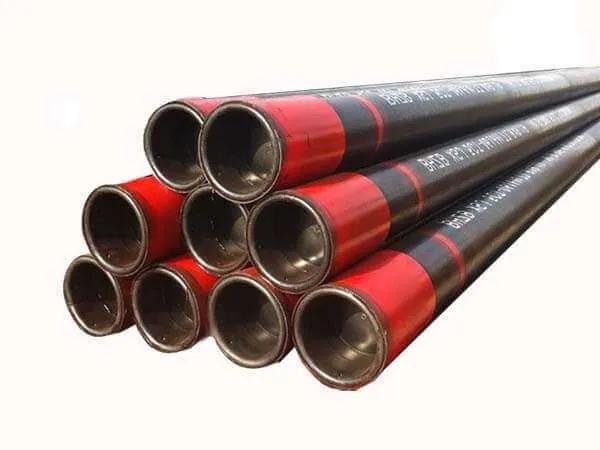
Carbon steel pipe is commonly used for construction, oil and gas, power generation, water transportation, and manufacturing. Carbon steel pipe is mainly made up of iron and carbon. Carbon content determines the strength, hardness, and ductility of the pipe.
Most carbon steel pipes have a carbon content of 0.04% to 2.1%. Carbon steel pipes are available in many dimensions ranging from 1/2-inch NB to 36-inch NB, with different nominal wall thicknesses, such as SCH 40, SCH 80, and SCH 160.
This article discusses the types of carbon steel pipe.
Classified by Manufacturing Process
Seamless Carbon Steel Pipes
Seamless steel pipes are produced from a solid steel billet. It undergoes heating and, by rolling or drawing operations, is pierced into a hollow shape.
Since there is no welded seam, they are strong and highly resistant to pressure and temperature variations. Applications of these pipes include:
- Oléoducs et gazoducs
- Systèmes hydrauliques
- Boilers
- Power plants
- Aerospace equipment
A typical example of such pipes is ASTM A106, which is used to transport steam, oil, and gas at high temperatures.
Welded Carbon Steel Pipes
As their name suggests, these pipes are made by forming steel plates or strips into rolls and welding the edges together. Their costs are lower than those of seamless pipes. They have wide applications in the construction industry and fluid transport systems. Popular welded pipes include:
ERW (Electric Resistance Welded)
The pipes are made by passing an electric current through their edges, thereby joining them. Pipes that are used for transporting water and construction.
LSAW (Longitudinal Submerged Arc Welded)
Made from thick steel plates and used for transporting crude oil and gas by pipelines.
SSAW (Spiral Submerged Arc Welded)
The pipes are made by rolling metal sheets into a spiral. The pipes are mainly used to transmit water and for construction work.
HFW (High Frequency Welded)
This welding method uses high-frequency electricity to produce welds.
Welded pipe is inexpensive to manufacture at large sizes, which explains its popularity in various industrial applications.
Classified by Carbon Content
Low-Carbon Steel Pipes
The maximum carbon content of low-carbon steel pipes is limited to 0.3%. These pipes are also known as mild steel pipes. These pipes are soft, ductile, and easy to weld. Applications for such pipes are:
- Building structures
- Water pipelines
- Automotive parts
- Bolts and nuts
- Furniture
Some common grades include ASTM A36, AISI 1008, and AISI 1018.
Medium-Carbon Steel Pipes
Medium-carbon steel pipes have around 0.3% to 0.6% carbon. They provide a balance of power and ductility. They are harder and stronger than low-carbon steel pipes, though welding them is not easy. These pipes are used for:
- Gears
- Shafts
- Connecting rods
- Machinery parts
Popular grades include AISI 1030, SAE 1541, and AISI 1050.
High-Carbon Steel Pipes
High-carbon steel pipes have a carbon amount of 0.6% to 1.0%. The pipes are highly hard and wear-resistant. However, compared to other carbon steel pipes, they are less elastic and stiffer. They are commonly used for:
- Springs
- Drill bits
- Saw blades
- Bearing parts
Because of their hardness, they are harder to machine and weld.
Classified by Application/Function
Carbon steel pipes are also grouped by use.
Structural Pipes
These pipes support buildings, bridges, towers, and industrial structures. Strength is more important than pressure resistance in these applications.
Fluid Transport Pipes
Used for moving water, oil, gas, steam, slurry, and chemicals. Industries such as oil refining and mining rely heavily on these pipes.
Boiler and Heat Exchanger Pipes
Designed to handle high heat and pressure inside boilers and power plants.
Line Pipes
Used in long-distance oil and gas transmission systems. API 5L is one of the most commonly used standards for line pipes.
Classified by Surface Treatment
Surface treatments help protect carbon steel pipes from rust and corrosion.
Black Carbon Steel Pipes
Have a dark oxide layer and are used in gas transport and fire sprinkler systems.
Galvanized Carbon Steel Pipes
Coated with zinc for better rust protection. Common in water supply systems and outdoor construction.
Painted or Coated Pipes
Covered with epoxy or polyethylene for extra corrosion resistance in harsh environments.
Classified by Major International Standards
Carbon steel pipes are produced in accordance with various international standards. Some major standards include:
- ASTM A53
- ASTM A106
- API 5L
- EN 10255
- EN 10216-2
- GB/T 3091
- GB/T 9711
The specifications determine the size of the pipes, their chemical composition, the pressure level, and the tests to be carried out.
Conclusion
Carbon steel pipes are available in several forms based on manufacturing process, carbon content and application. Seamless pipes are tough and are used under high pressure, whereas welded pipes are economical and manufactured in large sizes.
Low-carbon-content pipes are easily bendable and weldable. Medium-carbon-content pipes are tough but still remain bendable. High-carbon-content pipes are hard and tough. The strength, durability, and applicability of carbon steel pipes make them appropriate for many industrial applications.