
Tubería de pilotaje
TUSPIPE can provide you with pile pipes in sizes from DN50 to DN600, with wall thickness specifications covering schedule 5s to schedule xxs. From the selection of raw materials to the final delivery, we strictly adhere to the requirements of ASTM A252 standard structural pile pipes.
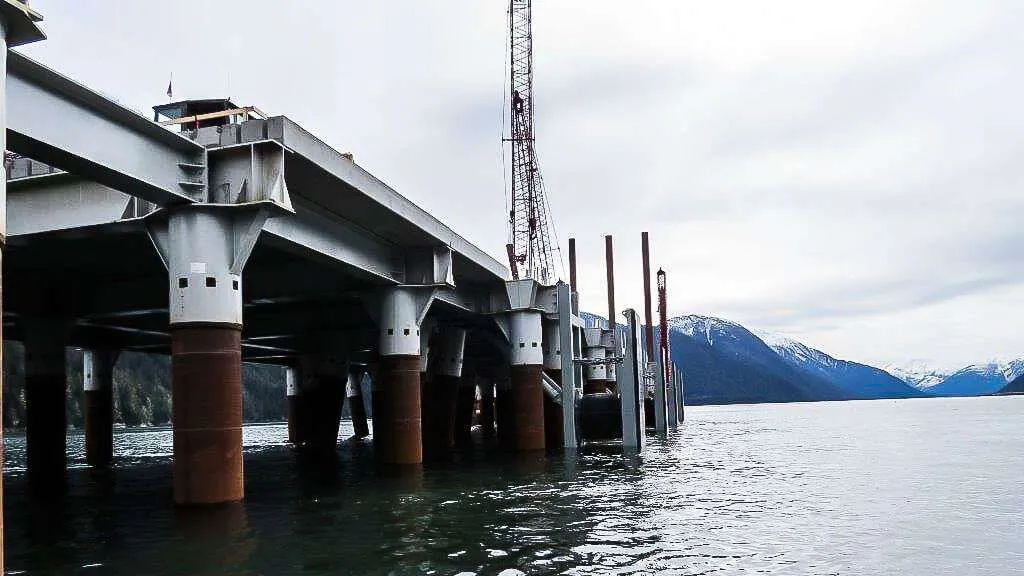
Tubería de pilotaje
A piling pipe is a steel pipe that is driven or drilled into the ground to support a structure. They are often used in deep foundations when the soil is too weak or soft to support the weight of the building. Piling pipes can be either open-ended or closed-ended. Open-ended pipes are driven into the ground and filled with concrete, while closed-ended pipes have steel caps on both ends. Piling pipes are also used in bridges and marine engineering. In addition to their use in deep foundations, piling pipes can also be used to support walls, retaining walls, and embankments. Piling pipes are an essential part of many construction projects.
Why Choose TUSPIPE?

Desde 1998, Tianjin United Steel Piping Co., Ltd (TUSPIPE) se ha comprometido a suministrar tubos de línea de alta calidad.
Con más de 500.000 toneladas de capacidad de producción anual, la empresa presta servicio a diversos campos e industrias, como la explotación y transmisión de petróleo y gas, la construcción naval y de automóviles, el agua y la electricidad, la protección del medio ambiente, la ingeniería mecánica, la construcción de infraestructuras, etc.
TUSPIPE da mucha importancia a la calidad de los productos y a un riguroso control de calidad de los mismos. Para mantener la buena calidad de los productos, la empresa ha establecido un Centro de Pruebas e Inspección desde 2004. Con una serie de pruebas de última generación y equipos de inspección, el centro de pruebas e inspección es capaz de realizar las pruebas de tracción, pruebas hidráulicas, pruebas de impacto, DWTT, etc.
The Development of Piling Pipe

The development of piling pipes can be traced back to the late 1980s. After a series of tests established its effectiveness in bearing loads, the use of piling pipes in the civil construction industry exploded. Piling pipe is now the preferred solution for projects involving huge loads or deep foundations, due to its load-bearing capacity, customizability, and cost-effectiveness. There are alternatives to piling pipe available, such as concrete or wood, but they are not as simple to use or as economical as steel pipe piles. Thanks to its many advantages, the piling pipe has become an essential tool in the modern construction industry.
Pipe piles are commonly used for major bridge foundations due to their stiffness and available size range. Pipe piles can be fabricated from a variety of materials, including extruded or rolled thin-walled pipe, spiral welded steel, extruded steel, and rolled steel. The most common type of pipe pile is the ASTM A252, which is made from welded and seamless steel pipe. The wall thickness of the pipe can be increased to increase the stiffness of the pile, making it ideal for use in bridge foundations. Pipe piles are also relatively easy to install, making them a popular choice for foundation work.
Dimension and Sizes of Piling Pipe
| DN | O. D. | W. T. | |||||||||||||||
|---|---|---|---|---|---|---|---|---|---|---|---|---|---|---|---|---|---|
| En pulgadas | mm | SCH5S | SCH10S | SCH10 | SCH20 | SCH30 | SCH40 | SCH60 | SCH80 | SCH100 | SCH120 | SCH140 | SCH160 | Sth | XS | XXS | |
| 50 | 2″ | 60.3 | 1.65 | 2.77 | - | - | - | 3.91 | - | 5.54 | - | - | - | 8.74 | 3.91 | 5.54 | 11.07 |
| 65 | 2 1/2″ | 73 | 2.11 | 3.05 | - | - | - | 5.16 | - | 7.01 | - | - | - | 9.53 | 5.16 | 7.01 | 14.02 |
| 80 | 3″ | 88.9 | 2.11 | 3.05 | - | - | - | 5.49 | - | 7.62 | - | - | - | 11.13 | 5.49 | 7.52 | 15.24 |
| 90 | 3 1/2″ | 101.6 | 2.11 | 3.05 | - | - | - | 5.74 | - | 8.08 | - | - | - | - | 5.74 | 8.08 | - |
| 100 | 4″ | 114.3 | 2.11 | 3.05 | - | - | - | 6.02 | - | 8.58 | - | 11.13 | - | 13.49 | 6.02 | 8.56 | 17.12 |
| 125 | 5″ | 141.3 | 2.77 | 3.4 | - | - | - | 6.55 | - | 9.53 | - | 12.7 | - | 15.88 | 6.55 | 9.53 | 18.05 |
| 150 | 6″ | 168.3 | 2.77 | 3.4 | - | - | - | 7.11 | - | 10.97 | - | 14.27 | - | 18.26 | 7.11 | 10.97 | 21.95 |
| 200 | 8″ | 219.1 | 2.77 | 3.76 | - | 6.35 | 7.04 | 8.18 | 10.31 | 12.7 | 15.09 | 18.26 | 20.62 | 23.01 | 8.18 | 12.7 | 22.23 |
| 250 | 10″ | 273.1 | 3.4 | 4.19 | - | 6.35 | 7.8 | 9.27 | 12.7 | 15.09 | 18.26 | 21.44 | 25.4 | 28.58 | 9.27 | 12.7 | 25.4 |
| 300 | 12″ | 323.9 | 3.96 | 4.57 | - | 6.35 | 8.38 | 10.31 | 14.27 | 17.48 | 21.44 | 25.4 | 28.58 | 33.32 | 9.53 | 12.7 | 25.4 |
| 350 | 14″ | 355.5 | 3.96 | 4.78 | 6.35 | 7.92 | 9.53 | 11.13 | 15.09 | 19.05 | 23.83 | 27.79 | 31.75 | 35.71 | 9.53 | 12.7 | - |
| 400 | 16″ | 406.4 | 4.19 | 4.78 | 6.35 | 7.92 | 9.53 | 12.7 | 16.66 | 21.44 | 26.19 | 30.96 | 36.53 | 40.49 | 9.53 | 12.7 | - |
| 450 | 18″ | 457.2 | 4.19 | 4.78 | 6.35 | 7.92 | 11.13 | 14.27 | 19.05 | 23.83 | 39.36 | 34.93 | 39.67 | 45.24 | - | - | - |
| 500 | 20″ | 508 | 4.78 | 5.54 | 6.35 | 9.53 | 12.7 | 15.09 | 20.62 | 26.19 | 32.54 | 38.1 | 44.45 | 50.01 | - | - | - |
| 550 | 22″ | 558.8 | 4.78 | 5.54 | 6.35 | 9.53 | 12.7 | - | 22.23 | 28.58 | 34.93 | 41.28 | 47.63 | 53.98 | - | - | - |
| 600 | 24″ | 609.6 | 5.54 | 6.35 | 6.35 | 9.53 | 14.27 | 17.48 | 24.61 | 30.96 | 38.89 | 46.02 | 52.37 | 59.54 | - | - | - |
Types of Piling Pipe
While all piling methods utilize driving pipes, varied soil conditions and structural requirements necessitate the use of specific types of piling pipes. Here is a rundown of some of the most prevalent:
- Unplugged Open-Ended
These are totally open-ended pipes. Following installation, the ground level within and outside the pipe should be identical. They largely distribute their burden to the soil via friction.
- Plugged Open-Ended
These have a stopper at the pipe’s bottom end. This results in the dirt inside the pipe being precisely less dense than the soil outside the pipe.
- Bottom Plate
This is one of two frequently encountered clogged piles. In this case, the bottom end is welded with a steel plate. The plate’s purpose is to compress and increase friction in order to prevent sliding. These are employed in rocky terrain when the rock and the pile are separated by a thin layer of dirt.
- Steel Pipe with Rock Shoe
This is the alternate type of plug. While rock shoes perform the same function as steel plates, they are employed in situations where the pile comes into direct contact with a rock surface. The shoe must be capable of supporting the entire load and preventing it from sliding down the rocky surface.
- Franki Piling Pipe
Franki heaps are intended to last a lifetime. They are plugged with a moist concrete infill and can endure far more impact from driving than their rivals.
Norma de producción de tubos a presión
ASTM A252 and ASTM A500 piling pipes are structural pipes that are well-suited for use in buildings, retaining walls, and other structures that require a robust, dependable, and high-quality steel piling pipe as a structural component.
The Difference between Open-Ended & Close-Ended Pipes
There are two primary types of pipes used in construction projects: open-ended and close-ended. Each has its own unique advantages and disadvantages that should be considered when choosing which type to use.
Open-ended pipes are more resistant to stress and damage, making them ideal for use in areas where there may be obstacles such as rock or boulders. Additionally, they are frequently used on offshore gas platforms and oil rigs. However, one downside of open-ended pipes is that they can be more difficult to install.
Close-ended pipes, on the other hand, are typically used in sandy areas. This is because they are better able to bear the load from the pile toe. While close-ended pipes are generally easier to install than open-ended pipes, they can be more susceptible to damage from water and chemicals.
Installation Methods for Piling Pipes
Piling pipes are installed in two primary ways: by driving piles or by drilling piles deeply into the ground. Each of these primary approaches can be accomplished by utilizing a variety of various procedures, depending on the type of Piling pipe utilized and the circumstances surrounding the installation.
- Driving Piles
Pile driving is a technique used to install piles into the ground. Pile driving involves using a pile driver to hammer the piles into the ground. It is often used in construction projects, such as building bridges and houses. Piling pipes can be driven into the ground through soil, sand, or rock. The force of the blow from the hammer drives the pile into the ground. The size of the pile and the type of soil will determine how deep the pile can be driven. In some cases, piles may need to be driven into bedrock. Pile driving is an efficient way to install piles in a short period. The technique is often used when traditional excavating methods are not possible or would be too expensive.
- Drilling Piles
Drilling piles are a construction method in which a piling pipe is installed underground. The piling pipe is made of steel, and its diameter is generally big. There are three types of drilling piles: end bearing piles, friction piles, and compaction piles. Drilling pile is mainly used to support the foundation of a building or other structure. It can also be used to stabilize the soil or sand below the foundation. In some cases, drilling piles can also be used to protect the foundation from water damage. When installed properly, drilling piles can provide a strong and sturdy foundation for any building or structure.
1. What Is a Class A Piling?
Class A piling is a type of pile foundation with extremely strict construction standards. It has strong load-bearing capacity and is mainly used for large bridges or super high-rise buildings. Its minimum tail diameter is 14 inches, and its minimum tip diameter is 8 inches.
2. What Are Two Types of Piping Used in Plumbing Systems?
Galvanized steel pipes: Galvanized steel pipes were widely used in the 1990s but are now being gradually replaced because they tend to rust and clog after five years of use.
PPR plastic pipes: This type of pipe is lightweight and highly corrosion-resistant. It is a white plastic pipe commonly used in residential plumbing systems.
3. Why Is Piling So Expensive?
Piling projects encountering complex geological conditions, such as isolated rock layers, can cause drill bits to break. Replacing a drill bit costs roughly the same as purchasing a car. The materials and installation costs for piling are also very high. Additionally, if construction is conducted near the ocean, additional safety measures are required, which incur extra costs. Therefore, the overall cost of piling projects is extremely high.


