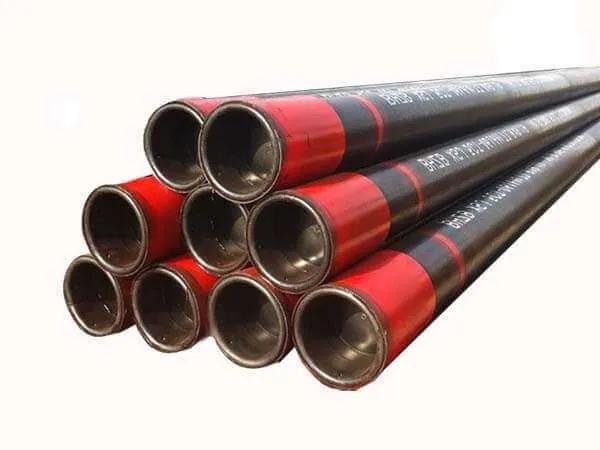
Tubo con reborde
TUSPIPE’s shouldered pipes are certified to EN 10255, AS/NZS 1074, and BS 1387 standards. We can also provide galvanized shouldered pipes to improve the corrosion resistance of the pipes and save on ongoing maintenance costs for your projects.
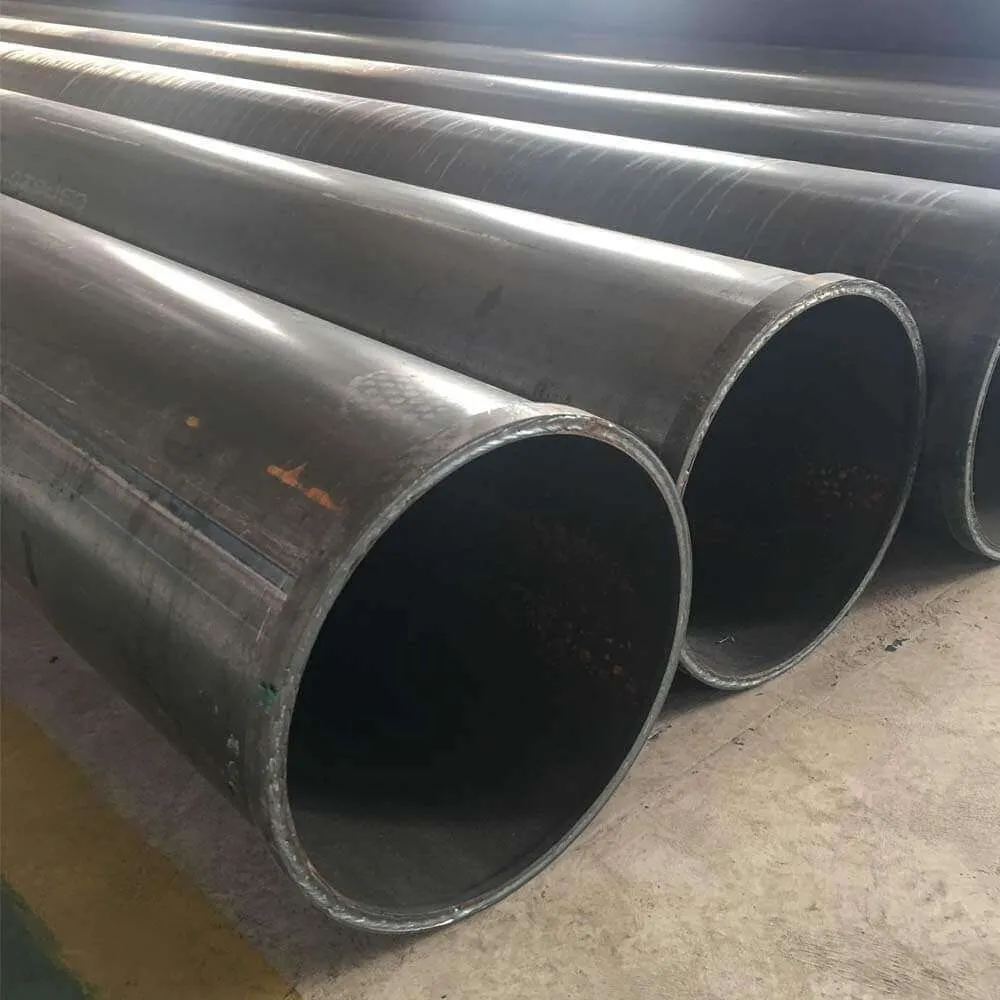
Tubo con reborde
The shouldered pipe is a type of pipe that is suitable for mining, cement, and concrete industries. The pipe has rings welded on each end, which helps to make easy connection between pipes. It is similar to a flange, which helps to make joints. The shoulder steel rings are welded to the outside of the pipe ends in an interference fit configuration. Shoulder rings are meticulously fitted to avoid ring deformation. Additionally, hydrostatic testing of these shouldered pipes can be scheduled and done. This pipe is an essential component in many industries due to its ability to connect various pipes together with ease.
The shouldered pipe is also available in hot dip galvanized coating for corrosion purposes.
¿Por qué elegir tuspipe?

Desde 1998, Tianjin United Steel Piping Co., Ltd (TUSPIPE) se ha comprometido a suministrar tubos de línea de alta calidad.
Con más de 500.000 toneladas de capacidad de producción anual, la empresa presta servicio a diversos campos e industrias, como la explotación y transmisión de petróleo y gas, la construcción naval y de automóviles, el agua y la electricidad, la protección del medio ambiente, la ingeniería mecánica, la construcción de infraestructuras, etc.
TUSPIPE da mucha importancia a la calidad de los productos y a un riguroso control de calidad de los mismos. Para mantener la buena calidad de los productos, la empresa ha establecido un Centro de Pruebas e Inspección desde 2004. Con una serie de pruebas de última generación y equipos de inspección, el centro de pruebas e inspección es capaz de realizar las pruebas de tracción, pruebas hidráulicas, pruebas de impacto, DWTT, etc.
Executive Standard of Shouldered Pipe
- EN 10255 – Non-Alloy steel tubes suitable for welding and threading – Technical delivery conditions
- BS 1387 – ERW steel tube specification with Light, Medium & Heavy series
- AS/NZS 1074 – Steel tubes and tubulars for ordinary service
Galvanizing Standard of Shouldered Pipe
- EN 1024 – Clay roofing tiles for discontinuous laying – Determination of geometric characteristics
- AS/NZS 4680 – Hot-dip galvanized (zinc) coatings on fabricated ferrous articles
- ISO 1461 – Hot dip galvanized coatings on fabricated iron and steel articles — Specifications and test methods
- SANS 121 – SOUTH AFRICAN NATIONAL STANDARD – Hot dip galvanized coatings on fabricated iron and steel articles
Dimensions and Sizes of Shouldered Pipe

| SHOULDERED PIPE DIMENSIONS | |||||
|---|---|---|---|---|---|
| O.D. | NPS | “DS” | Tolerance +/- | “L” | |
| mm | mm | mm | mm | mm | mm |
| 60.3 | 50 | 66.5 | 0.8 | 0.8 | 16 |
| 88.9 | 80 | 97 | 0.8 | 0.8 | 16 |
| 114.3 | 100 | 122 | 0.8 | 0.8 | 17.5 |
| 165.1 | 150 | 174.5 | 0.8 | 0.8 | 17.5 |
| 168.3 | 150 | 178 | 0.8 | 0.8 | 17.5 |
| 219.1 | 200 | 232 | 0.8 | 1.4 | 20.5 |
Dimensions and Sizes of Rings on Shouldered Pipe
| O.D. | NPS | Ring I.D. | Ring O.D. | Tolerance +/- | Ring Width | |
|---|---|---|---|---|---|---|
| mm | DN | mm | mm | mm | mm | Anchura |
| 60.3 | 50 | 60.3 | 66.5 | 0.8 | 0.8 | 16 |
| 88.9 | 80 | 88.9 | 97 | 0.8 | 0.8 | 16 |
| 114.3 | 100 | 114.3 | 122 | 0.8 | 0.8 | 17.5 |
| 139.7 | 125 | 139.7 | 149 | 0.8 | 0.8 | 17.5 |
| 165.1 | 150 | 165.1 | 174.5 | 0.8 | 0.8 | 17.5 |
| 168.3 | 150 | 168.3 | 178 | 0.8 | 0.8 | 17.5 |
| 219.1 | 200 | 219.1 | 232 | 0.8 | 1.4 | 20.5 |
| 273 | 250 | 273 | 286 | 0.8 | 1.9 | 20.5 |
| 323.9 | 300 | 323.9 | 336.5 | 0.8 | 2.4 | 20.5 |
| 355.6 | 350 | 355.6 | 368.5 | 0.8 | 2.4 | 24 |
| 406.4 | 400 | 406.4 | 419 | 0.8 | 2.4 | 25.5 |
| 457 | 450 | 457 | 470 | 0.8 | 2.4 | 25.5 |
Working & Test Pressures Shouldered Pipe
| O.D. | W.T. | Max Working Pressure | Max Test Pressure |
|---|---|---|---|
| mm | mm | mpa | mpa |
| 60.3 | 2 | 8.8 | 19 |
| 88.9 | 2 | 5.6 | 12 |
| 114.3 | 2 | 5.6 | 10 |
| 165.1 | 2.5 | 4.2 | 8.8 |
| 219.1 | 3.2 | 3.8 | 8 |
The above test and working pressures only relate to internal pressures in the straight pipes when the maximum working medium temperature is 50 degrees Celsius. This means that the piping system’s overall maximum working pressure is limited to the capabilities of the joining system. In the Shouldered Pipe Product, this working pressure is limited to that of the Shouldered Couplings working pressure. As a result, systems should be designed with the couplings maximum working pressure in mind. This will ensure that the piping system can withstand the required pressure without damage or failure.
Material Strengths of Shouldered Pipe
- Minimum Longitude Yield Strength 350 MPa
- Minimum Transverse Yield Strength 289 MPa
- Minimum Tensile Strength 430 MPa
Facts about Shouldered Pipe
- Weld-On steel shoulder rings, the interference fit with the exterior of the pipe ends is critical, and hence the fit must be clean.
- Pipe ends to which steel shoulder rings are to be mounted should be within the tolerances specified under Shoulder Dimensions.
- To acquire these statistics, circumferential tape (or another appropriate averaging technique) should be used to measure the pipe ends.
- Pipes that do not meet this tolerance must be sized for a 50mm radius from the end.
- When installing shoulder rings, caution is essential to avoid ring deformation.
- It is critical to maintain a precise gap between the edge of the steel shoulder ring and the pipe end. If this “Stand off” value (see the table below) is surpassed, distortion occurs. For holding and fastening, a setting jig is advised.
- Before welding, the pipe ends and steel shoulder rings must be clean and free of corrosion, grease, and paint.
- Remove all spatter from the face and border of the steel shoulder ring following welding.
- If pipe ends are discovered to be oval after welding, they must be rounded to the specified dimensions and tolerances to suit the housings.