Line Pipe
As your reliable partner, TUSPIPE cTUSPIPE supplies you with line pipes conforming to the API 5L standard. Not only have we obtained certification under the API 5L standard, but we also go beyond its requirements in the production of every steel pipe. Whether you need seamless line pipes or welded pipes, you can find the most suitable carbon steel pipes for your project right here.an supply you with SSAW steel pipes that have obtained certifications from the international systems of API 5L and GB/T 9711. The size range of these pipes spans from DN200 to DN2000. Our carbon steel pipe products undergo stringent quality control at every stage of the production process, ensuring that we provide you with pipe materials of optimal performance.
Line Pipe
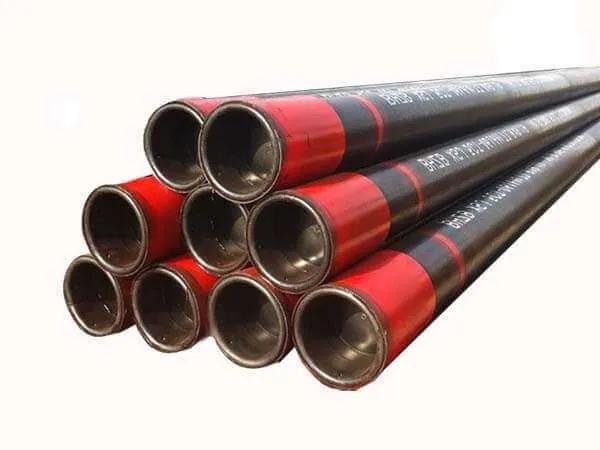
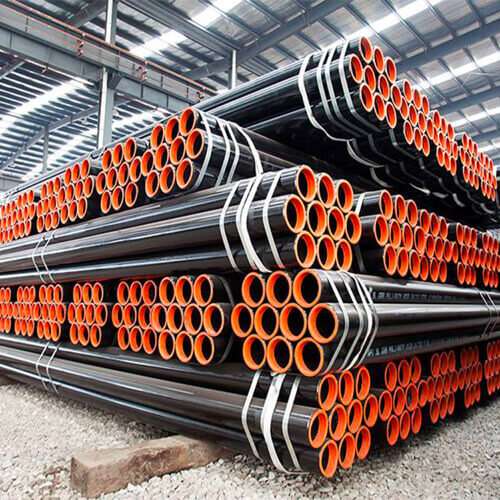
Line pipe is a kind of steel pipe specially responsible for transporting oil, natural gas, and liquids over long distances. The pipe is made of high-strength steel, which enables it to withstand the harsh conditions of high pressure and temperature during transportation. The production of pipeline steel pipes is strictly in conforming to the standard specifications formulated by international organizations such as the American Petroleum Institute (API).
For example, the API 5L standard. It comes in a wide variety of sizes. Seamless pipe or welded pipe can be satisfied. Among them, the seamless steel pipe is made of a complete steel plate, and the welded steel pipe is welded through the steel plate. Different pipe diameters, wall thicknesses, and steel grades have different strengths, and durability. In general, the most commonly used steel grades for pipeline pipes are Class B to X80.
Why Choose TUSPIPE?

Desde 1998, Tianjin United Steel Piping Co., Ltd (TUSPIPE) se ha comprometido a suministrar tubos de línea de alta calidad.
The main products are API 5L Line Pipe, API 5CT Casing Pipe, and Tubing. And also, Tianjin United Steel Piping Co., Ltd supplies slotted liner, compressor tubes, transmission shaft tubes, torque tubes, piling pipes, sprinkler pipes, boiler pipes, roller pipes, etc. Production standards include API SPEC 5CT, API SPEC 5L, JIS G 3444, JIS G 3452, ASTM A53/A53M, ASTM A135, ASTM A252, ASTM A500, ASTM A795, AS/NZS 1163, AS/NZS 1074, AS/NZS 1396, EN 10217, EN 10219, EN 10255, UL 852, FM 1630, GB/T 9711, GB/T 3091, GB/T 13793, GB/T 19830, YB/T 5209, and SY/T 5768.
Production Standards of Line Pipe

API 5L is the most common specification for line pipes, covering seam steel pipes that are intended for conveying petroleum, H2O, and fuel in the natural gas and petroleum industries. API 5L pipes are manufactured as per specifications established by American Petroleum Institute (API) for standard pipelines. The most common versions of API 5L are API 5L X70 PSL1 & PSL2 and API 5L X65 PSL1 & PSL2. According to international standard ISO 3183 “Petroleum and natural gas industries-Steel Pipe for pipelines-Technical Delivery Conditions,” different grades of line pipes can be supplied: L175 or A25, L210 or A, L290 or X42, L360 or X52, L415 or X60, l450 or X65 GR.B. In addition to the different grades we can supply different steel pipelines: ERW (Electric resistance welded), SSAW (Spiral submerged arc welded) and LSAW (Longitudinal submerged arc welded). According to the requirements of end users, different surface finishes can be.
Types of Line Pipe
Line pipe is a pipe specialized in transporting fluids and plays a wide role in the transportation of oil, gas, water and other liquids. Each type of transportation object has different requirements for the pipe, mainly in terms of corrosion resistance, hardness and pressure resistance. Several line pipes for different transportation objects will be described below.
- Water and Drain Line Pipe
Characteristics of water: Transportation of water is not only drinking water, but also industrial wastewater, sewage, etc. Although the anti-corrosion ability of the pipeline does not require a high degree of corrosion resistance, the pipeline for drinking water must meet the health standards to ensure that the water quality will not be contaminated in the transportation process.
Characteristics of water pipes: water pipes can be made of pvc, pe, cast iron and steel pipe, etc. Usually the pipes for drinking water need to have smooth inner walls, while industrial wastewater and sewage need to have a certain anti-corrosion ability. Different materials may be selected according to different needs.
- Oil Line Pipe
The main characteristics of oil: oil viscosity, containing certain impurities, the pipeline corrosion resistance and mechanical strength requirements are high.
Oil line pipe features: generally made of high-strength carbon steel or alloy steel, and the pipe needs to do anti-corrosion treatment, add anti-corrosion coating and anti-corrosion lining, so as to extend the life of the pipe. In addition, oil pipelines also need to have a certain degree of high temperature resistance to cope with the transportation environment.
- Gas Line Pipe
Characteristics of natural gas: Natural gas is a high-pressure gas, and in the transportation process, it needs to be very airtight, any small leakage will cause serious safety accidents.
Characteristics of natural gas line pipe: Highly airtight, corrosion-resistant and high-pressure resistant.
DIMENSIONS AND WALL THICKNESSES OF LINE PIPE
You can check the size range of tubes in ISO 4200 and ASME B36.10M. These are the standardized values for the specified outside diameters and specified wall thickness of these tubes. ISO 4200 covers plain-end steel tubes, while ASME B36.10M covers seamed and seamless wrought steel pipes. You should refer to these standards when checking these.
| NPS | O. D. | W. T. | |||||||||||||||
|---|---|---|---|---|---|---|---|---|---|---|---|---|---|---|---|---|---|
| DN | En pulgadas | mm | SCH5S | SCH10S | SCH10 | SCH20 | SCH30 | SCH40 | SCH60 | SCH80 | SCH100 | SCH120 | SCH140 | SCH160 | Sth | XS | XXS |
| 50 | 2″ | 60.3 | 1.65 | 2.77 | - | - | - | 3.91 | - | 5.54 | - | - | - | 8.74 | 3.91 | 5.54 | 11.07 |
| 65 | 2 1/2″ | 73 | 2.11 | 3.05 | - | - | - | 5.16 | - | 7.01 | - | - | - | 9.53 | 5.16 | 7.01 | 14.02 |
| 80 | 3″ | 88.9 | 2.11 | 3.05 | - | - | - | 5.49 | - | 7.62 | - | - | - | 11.13 | 5.49 | 7.52 | 15.24 |
| 90 | 3 1/2″ | 101.6 | 2.11 | 3.05 | - | - | - | 5.74 | - | 8.08 | - | - | - | - | 5.74 | 8.08 | - |
| 100 | 4″ | 114.3 | 2.11 | 3.05 | - | - | - | 6.02 | - | 8.58 | - | 11.13 | - | 13.49 | 6.02 | 8.56 | 17.12 |
| 125 | 5″ | 141.3 | 2.77 | 3.4 | - | - | - | 6.55 | - | 9.53 | - | 12.7 | - | 15.88 | 6.55 | 9.53 | 18.05 |
| 150 | 6″ | 168.3 | 2.77 | 3.4 | - | - | - | 7.11 | - | 10.97 | - | 14.27 | - | 18.26 | 7.11 | 10.97 | 21.95 |
| 200 | 8″ | 219.1 | 2.77 | 3.76 | - | 6.35 | 7.04 | 8.18 | 10.31 | 12.7 | 15.09 | 18.26 | 20.62 | 23.01 | 8.18 | 12.7 | 22.23 |
| 250 | 10″ | 273.1 | 3.4 | 4.19 | - | 6.35 | 7.8 | 9.27 | 12.7 | 15.09 | 18.26 | 21.44 | 25.4 | 28.58 | 9.27 | 12.7 | 25.4 |
| 300 | 12″ | 323.9 | 3.96 | 4.57 | - | 6.35 | 8.38 | 10.31 | 14.27 | 17.48 | 21.44 | 25.4 | 28.58 | 33.32 | 9.53 | 12.7 | 25.4 |
| 350 | 14″ | 355.5 | 3.96 | 4.78 | 6.35 | 7.92 | 9.53 | 11.13 | 15.09 | 19.05 | 23.83 | 27.79 | 31.75 | 35.71 | 9.53 | 12.7 | - |
| 400 | 16″ | 406.4 | 4.19 | 4.78 | 6.35 | 7.92 | 9.53 | 12.7 | 16.66 | 21.44 | 26.19 | 30.96 | 36.53 | 40.49 | 9.53 | 12.7 | - |
| 450 | 18″ | 457.2 | 4.19 | 4.78 | 6.35 | 7.92 | 11.13 | 14.27 | 19.05 | 23.83 | 39.36 | 34.93 | 39.67 | 45.24 | - | - | - |
| 500 | 20″ | 508 | 4.78 | 5.54 | 6.35 | 9.53 | 12.7 | 15.09 | 20.62 | 26.19 | 32.54 | 38.1 | 44.45 | 50.01 | - | - | - |
| 550 | 22″ | 558.8 | 4.78 | 5.54 | 6.35 | 9.53 | 12.7 | - | 22.23 | 28.58 | 34.93 | 41.28 | 47.63 | 53.98 | - | - | - |
| 600 | 24″ | 609.6 | 5.54 | 6.35 | 6.35 | 9.53 | 14.27 | 17.48 | 24.61 | 30.96 | 38.89 | 46.02 | 52.37 | 59.54 | - | - | - |
Chemical composition of line pipe
- API 5L PSL-1 Chemical Component
| Grado de acero | Mass Fraction, Based on Melting and Product Analysis % | |||||||
|---|---|---|---|---|---|---|---|---|
| C | Mn | P | S | V | Nb | Ti | ||
| máx. | máx. | min. | máx. | máx. | máx. | máx. | máx. | |
| L175 or A25 | 0.21 | 0.6 | - | 0.03 | 0.03 | - | - | - |
| L175P or A25P | 0.21 | 0.6 | 0.045 | 0.08 | 0.03 | - | - | - |
| L210 or GR. A | 0.22 | 0.9 | - | 0.03 | 0.03 | - | - | - |
| L245 or GR. B | 0.26 | 1.2 | - | 0.03 | 0.03 | - | - | - |
| L290 or X42 | 0.26 | 1.3 | - | 0.03 | 0.03 | - | - | - |
| L320 or X46 | 0.26 | 1.4 | - | 0.03 | 0.03 | - | - | - |
| L360 or X52 | 0.26 | 1.4 | - | 0.03 | 0.03 | - | - | - |
| L390 or X56 | 0.26 | 1.4 | - | 0.03 | 0.03 | - | - | - |
| L415 or X60 | 0.26 | 1.4 | - | 0.03 | 0.03 | - | - | - |
| L450 or X65 | 0.26 | 1.45 | - | 0.03 | 0.03 | - | - | - |
| L485 or X70 | 0.26 | 1.65 | - | 0.03 | 0.03 | - | - | - |
- API 5L PSL-2 Chemical Component
| Grado de acero | Mass Fraction, Based on Melting and Product Analysis % | CEC(%) max | |||||||||
|---|---|---|---|---|---|---|---|---|---|---|---|
| C | Si | Mn | P | S | V | Nb | Ti | Otros | CEIIW | CEPcm | |
| L245M or BM | 0.22 | 0.45 | 1.2 | 0.025 | 0.015 | 0.05 | 0.05 | 0.04 | - | 0.43 | 0.25 |
| L290M or X42M | 0.22 | 0.45 | 1.3 | 0.025 | 0.015 | 0.05 | 0.05 | 0.04 | - | 0.43 | 0.25 |
| L320M or X46M | 0.22 | 0.45 | 1.3 | 0.025 | 0.015 | 0.05 | 0.05 | 0.04 | - | 0.43 | 0.25 |
| L360M or X52M | 0.22 | 0.45 | 1.4 | 0.025 | 0.015 | - | - | - | - | 0.43 | 0.25 |
| L390M or X56M | 0.22 | 0.45 | 1.4 | 0.025 | 0.015 | - | - | - | - | 0.43 | 0.25 |
| L415M or X60M | 0.12 | 0.45 | 1.6 | 0.025 | 0.015 | - | - | - | - | 0.43 | 0.25 |
| L450M or X65M | 0.12 | 0.45 | 1.6 | 0.025 | 0.015 | - | - | - | - | 0.43 | 0.25 |
| L485M or X70M | 0.12 | 0.45 | 1.7 | 0.025 | 0.015 | - | - | - | - | 0.43 | 0.25 |
| L555M or X80M | 0.12 | 0.45 | 1.85 | 0.025 | 0.015 | - | - | - | - | 0.43 | 0.25 |
| L625M or X90M | 0.1 | 0.55 | 2.1 | 0.02 | 0.01 | - | - | - | - | - | 0.25 |
| L690M or X100M | 0.1 | 0.55 | 2.1 | 0.02 | 0.01 | - | - | - | - | - | 0.25 |
| L830M or X120M | 0.1 | 0.55 | 2.1 | 0.02 | 0.01 | - | - | - | - | - | 0.25 |
Mechanical Properties of API 5L Line Pipe
| Propiedad mecánica | |||
|---|---|---|---|
| TENSILE ( Min ) | YIELD ( Min ) | ||
| Psi X 1000 | Mpa | Psi X 1000 | Mpa |
| 45 | 310 | 25 | 172 |
| 48 | 331 | 30 | 207 |
| 60 | 414 | 35 | 241 |
| 60 | 414 | 42 | 290 |
| 63 | 434 | 46 | 317 |
| 66 | 455 | 52 | 359 |
| 71 | 490 | 56 | 386 |
| 75 | 517 | 60 | 414 |
| 77 | 531 | 65 | 448 |
| 82 | 565 | 70 | 483 |
| Propiedad mecánica | |||||||
|---|---|---|---|---|---|---|---|
| Tracción | Yield | C. E. IMPACT ENERGY | |||||
| Psi x 1000 | Mpa | Psi x 1000 | Mpa | PCM | IIW | J | FT/LB |
| 60 – 110 | 414 – 758 | 35 – 65 | 241 – 448 | 0.25 | 0.43 | T/L 27/41 | T/L 20/30 |
| 60 – 110 | 414 – 758 | 42 – 72 | 290 – 496 | 0.25 | 0.43 | T/L 27/41 | T/L 20/30 |
| 63 – 110 | 434 – 758 | 46 – 76 | 317 – 524 | 0.25 | 0.43 | T/L 27/41 | T/L 20/30 |
| 66 – 110 | 455 – 758 | 52 – 77 | 359 – 531 | 0.25 | 0.43 | T/L 27/41 | T/L 20/30 |
| 71 – 110 | 490 – 758 | 56 – 79 | 386 – 544 | 0.25 | 0.43 | T/L 27/41 | T/L 20/30 |
| 75 – 110 | 517 – 758 | 60 – 82 | 414 – 565 | 0.25 | 0.43 | T/L 27/41 | T/L 20/30 |
| 77 – 110 | 531 – 758 | 65 – 82 | 448 – 565 | 0.25 | 0.43 | T/L 27/41 | T/L 20/30 |
| 82 – 110 | 565 – 758 | 70 – 82 | 483 – 565 | 0.25 | 0.43 | T/L 27/41 | T/L 20/30 |
| 90 – 120 | 621 – 827 | 80 – 102 | 552 – 705 | 0.25 | 0.43 | T/L 27/41 | T/L 20/30 |
Line Pipe Coatings
Fused bonded epoxy (FBE) is a high quality coating material with several advantages. It is mainly used in the construction of pipeline projects. FBE has excellent adhesion and excellent corrosion resistance. Standard FBE is suitable for a wide range of operating temperatures, from -30°C to 100°C. Thus, structural stability can be maintained. This method can be widely used for directional drilling in most soil conditions and clays. On the other hand, it is able to combat UV rays, protect the safety of exposed pipes, extend service life, and optimize economic returns.
Three Layers Polyethylene (3PE) coating is an efficient and durable pipeline corrosion protection technology that is widely used around the world. The special three-layer structure of the bottom epoxy coating, the middle binder layer and the polyethylene surface layer provides a strong support for the high performance operation of the pipeline. Among them, the three-layer polyethylene coating system has excellent mechanical properties that match the properties of the coating material and can withstand high temperatures of up to 50°C (low and medium density polyethylene) or 70°C (high density polyethylene).
In the coating of three layers of polypropylene (3PP), there are three structural layers. The bottom layer of FBE has a strong adhesion ability, so epoxy powder (FBE) is used as the base layer. The central layer acts as an adhesive and is tightly attached to the three-layer structure. The excellent corrosion resistance of polypropylene (PP) as the top layer. The three layers can protect the steel pipe in all directions. Significantly extend the life of the steel pipe
Each layer represents the overall functional performance of the coating. Epoxy resin is the main film component of the coating, and the epoxy groups in its molecular structure can form a strong cross-linked network structure during curing. Epoxy resins and coal bitumen show excellent chemical stability, they can effectively protect against acid, alkali, salt and other chemical substances. At a fine point of view, the epoxy coal asphalt coating has the ability to repair minor damage or cracks.
- Recubrimiento anticorrosión de silicona
The silicone in the silicone anti-corrosion coating has strong chemical resistance, weather resistance and insulation. The structure is stable. Silicone corrosion resistance layer has excellent corrosion resistance, but also has insulation, waterproof and external protection functions, the maximum temperature resistance of 600°C, it is suitable for conveying 550°C high temperature medium insulation pipeline.
Internal coating of steel pipes is a method of coating the inner wall of a pipe with one or more layers of material. The purpose is to protect the steel from rust and prevent the erosion of the fluid medium on the steel pipe. There are many kinds of internal coatings, and the ideal inner coating should minimize the loss of fluid resistance and increase the transmission efficiency. It also has excellent corrosion resistance, reducing or eliminating corrosion and blockage on the inner wall of the pipeline
What is the Performance of Line Pipe Coating?
- Thickness Requirements for Pipeline Anti-corrosion Coating
| Diámetro nominal | Revestimiento epoxi/μm | Revestimiento adhesivo/μm | Mín. Espesor del revestimiento de PE | |
|---|---|---|---|---|
| Común (mm) | Mejorado (mm) | |||
| DN≤100 | ≥120 | ≥170 | 1.8 | 2.5 |
| 100<DN≤250 | 2 | 2.7 | ||
| 250<DN≤500 | 2.2 | 2.9 | ||
| 500<DN≤850 | 2.5 | 3.2 | ||
| DN≥800 | 3 | 3.7 | ||
- Performance Index of Fused Epoxy Coating
| No. | Artículo | Indicadores de resultados |
|---|---|---|
| 1 | Adhesión, Clasificación | ≤2 |
| 2 | Cátodo Racking (65℃,48h)/mm | Distancia de estantería ≤8 |
| 3 | Cátodo Racking (65℃,30d)/mm | Distancia de estantería ≤15 |
| 4 | Anti-flexión (-20℃,2,5°) | No Crack |
- Índice de rendimiento del adhesivo de estructura bicapa
| No. | Artículo | Indicadores de resultados |
|---|---|---|
| 1 | Densidad (g/cm²) | 0.920 – 0.950 |
| 2 | Caudal de fusión (190℃,2,16kg)(g/10min) | ≥0.7 |
| 3 | Suavizante Vicat (℃) | ≥90 |
| 4 | Temperatura de fragilidad (℃) | ≤-50 |
| 5 | Tiempo de inducción a la oxidación (200℃) | ≥10 |
| 6 | Contenido de humedad % | ≤0.1 |
| 7 | Resistencia a la tracción Mpa | ≥17 |
| 8 | Alargamiento tras fractura % | ≥600 |
- Índice de rendimiento del adhesivo de estructura bicapa
| No. | Artículo | Indicadores de resultados | |
|---|---|---|---|
| 1 | Resistencia a la tracción | Dirección axial, Mpa | ≥20 |
| Dirección circunferencial, Mpa | ≥20 | ||
| Desviación, % | ≤15 | ||
| 2 | Alargamiento tras fractura, % | ≥600 | |
| 3 | Dureza de indentación (mm) | 23℃ | ≤0.2 |
| 50℃ o 70℃ | ≤0.3 | ||
| 4 | Agrietamiento por estrés ambiental duradero (F50),h | ≥1000 | |
What is the Difference between Seamless Line Pipe and Welded Line Pipe?
Line pipes are appropriate for a range of standards. According to consumer needs, production meets the line pipe of various standards. We are usually made according to metallurgical requirements that were developed by the American Petroleum Institute (API). API 5L Specifications cover seamless and welded pipes suitable for use in conveying H2O, fuel, and other liquefied media. It is used in line pipe production worldwide. Pipelines are made in a wide variety, varying in dimensions from 2 to 24 inches.
Depending on the customer’s needs, pipeline manufacturers can produce either seamless or welded pipes. The main difference between the two is that the latter has a seam that is created during the manufacturing process, while seamless pipes do not have this seam. Both types of pipes have many uses, and which one is right for a particular project depends on and is limited to several factors such as cost, application, and transportation. Seamless pipes are typically more expensive, but they have superior strength and durability which is preferable for your project. Though the other type is less expensive but may be more prone to leaking.
It is also important to note that when choosing, make sure that whatever material you are going to use, is accredited by ASTM. All of these must be considered in accomplishing a CSA. Therefore, it is important to search for consulting services where a trained professional can help you determine which types of pipes are best for your needs.
Enlaces relacionados:
1. What Is the Difference between Pipe and Line Pipe?
The term “pipe” is a broad term that encompasses various types and materials. Examples include carbon steel pipes, alloy pipes, copper pipes, and plastic pipes.
Line pipes, on the other hand, are a specific type of pipe that are usually manufactured to very strict standards. They comply with the API 5L standard, for example. These pipes are characterized by high strength and excellent corrosion resistance.
2. Are Line Pipe and Npt the Same?
Of course not!
Pipeline pipes are suitable for transport in high-pressure environments and over long distances. They are typically used to transport liquids such as oil and natural gas and are mainly connected with welded or flanged joints.
NPT stands for “National Pipe Thread” and refers to an American standard for small-diameter tapered pipe threads for low-pressure environments, which ensure a tight connection through threaded joints.
3. What Is a PEX Pipe?
PEX pipes are high-performance plastic pipes made of “cross-linked polyethylene.” Compared to conventional pipes, they offer the advantages of flexibility, low weight, and cost efficiency. The polyethylene in PEX pipes is chemically or physically reinforced to improve temperature resistance and strength. They are mainly used in hot and cold water piping systems and underfloor heating.