
Tubo ERW- China Tubo soldado ERW Estándares/ Proceso Fabricante TUSPIPE
TUSPIPE is a globally leading manufacturer of ERW steel pipes, offering a comprehensive product range that includes: Small-diameter pipes from 6mm to 102mm. Medium-diameter pipes from 114mm to 508mm. Large-diameter pipes exceeding 508mm. We are committed to perfecting every ERW steel pipe through precision engineering and uncompromising quality standards.
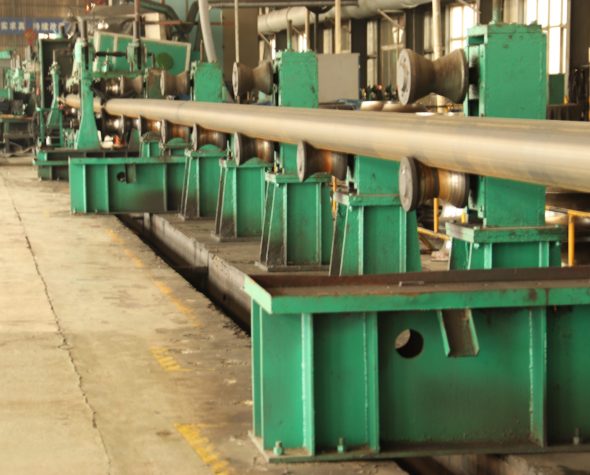
ERW TUBO
ERW pipe stands for resistance Welded pipe. ERW pipe is welded by resistance welding technology, through the edge of the pipe heated to a molten state of more than 1000°C, 2000A to 10000A current, and then apply pressure to weld the edge of the pipe. The general welding pressure is 5MPa to 15MPa.
The steel pipe manufactured by resistance welding technology has extremely high production efficiency and greatly reduces the cost loss. Therefore, it is widely used in various applications
ERW PIPE SPECIFICATION
TUSPIPE is a Chinese steel pipe manufacturer with over 20 years of experience. We operate three production lines, primarily ERW steel pipe. TUSPIPE utilizes advanced resistance welding lines sourced from Germany, and our steel pipe production adheres strictly to international standards. The following are just a few of the sizes we produce. For a complete list of standards, please visit our product and standards pages, or email us for inquiries.
| Contenido | Clasificación | Parámetros |
| Definición | Proceso de fabricación | High-frequency resistance welding (50-450kHz) |
| Main Standards | API 5L, EN10219, ASTM A53 | |
| Dimensión | Diámetro | 6mm-660mm (1/4″-26″) |
| Espesor de pared | SCH10-SCH160 | |
| Longitud | 5-14m (customizable up to 12m for ocean freight) | |
| Tolerancias | ±10% (routine), ±5% (precision) | |
| Material | Acero al carbono | 10#-45#, Q195-Q345, 16Mn |
| Acero inoxidable | GB/T14976-2012 (additional weld testing required) | |
| Rendimiento | Límite elástico | 235MPa to 555MPa |
| Pruebas | Weld Inspection | Ultrasonic flaw detection |
| Heat Treatment | In-line annealing, hardness ≤ HRB 90 |
ERW pipe according to the most standard size requirements, the internal diameter, external diameter, length and wall thickness of the pipe parameters are strictly controlled. Among them, the small diameter pipe of ERW pipe is 6mm to 102mm, the medium diameter pipe is 114mm to 508mm, and the large diameter pipe is greater than 508mm. The length usually ranges from 6 meters to 12 meters. At the same time, we can provide flexible size customization services to ensure that you get the steel pipe and engineering fit.
- Outside Diameter (OD):1/2 inch (12.7 mm) to 24 inches (610 mm)
- Tolerances: tightly controlled according to international and industry standards (e.g. API, ASTM, etc.)
- Wall thickness: 0.5mm to 20mm; accordance with international and regional standards
The dimensions, lengths and wall thicknesses of ERW’s pipelines are strictly controlled within the limits and in strict adherence to international standards, allowing the pipelines to last longer. Please feel free to contact us for any needs and queries!
Citation: What is ERW
ERW PIPE PROCESS
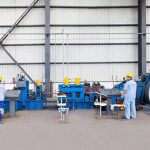
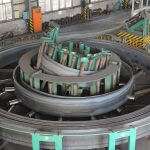
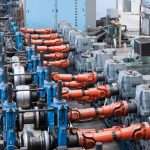
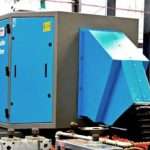
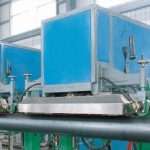
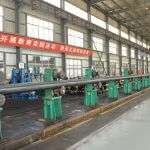
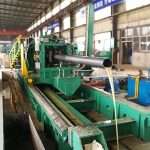
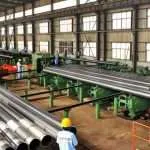
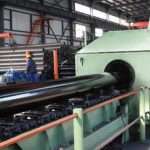
- Raw material preparation
erw steel pipe is made from hot rolled steel coil by welding, firstly uncoil the coil to make it a flat steel plate, then cut and trim the coil to ensure the edge is flat and guarantee the effect of the subsequent process. - Formando
The steel plate is continuously bent and reshaped through a series of rolls, during which the dimensions of the steel pipe need to be precisely positioned. - High Frequency Welding
After the molding is completed, the use of high-frequency current to heat the connection part of the steel plate, high-frequency current produces resistance heat, can melt the steel plate edge of the steel, and then through the extrusion of the rollers, to achieve the edge of the weld, the formation of a closed pipe, this welding is not only fast, but also to ensure that the weld physical and chemical properties. - Weld seam treatment
After welding, there may be burrs and other excess metal at the weld, which need to be trimmed and removed to ensure that the weld is smooth. - Dimensioning
It is mainly to trim the outer diameter of the pipe caused by the pressure during the welding process. Accurately control the outer diameter of the pipe to ensure its mechanical properties. - Cooling check
Sized steel pipe needs to be cooled to room temperature, generally spray or natural cooling. The inspection of steel pipe includes non-destructive testing, hydraulic pressure inspection, tensile test, etc. to ensure the performance of steel pipe. - Corte
The final steel pipe will be cut into the appropriate size according to the customer’s requirements. - Surface treatment, inspection and packaging
The produced steel pipe will be surface treated according to customer’s requirements, including: galvanized, electroplated, painted and so on. If customers have requirements, we can carry out three-party inspection. Finally, the steel pipes will be marked and packed according to the requirements in the standard to ensure that they will not be damaged during transportation.
ERW steel pipe shapes
The shape and size of resistance welded pipe have a very important influence on the use and design of the pipe.
Resistance welded pipes are divided into the following types of shapes.
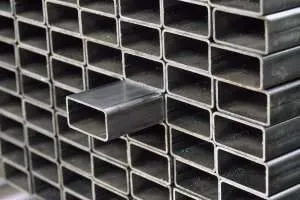
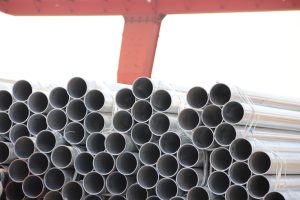
Round ERW pipe
Round pipe is the most common type of ERW pipe. The structure of the pipe is uniform, so the force is uniform, and it is suitable for various pressure conditions.
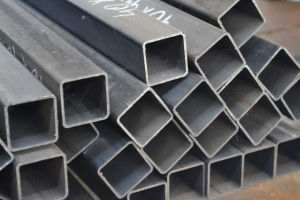
Square ERW pipe:
The square ERW pipe has a unique square cross section structure, which is more suitable for spatial layout, but the bearing capacity of the circular ERW pipe is not as good as that of the circular pipe.
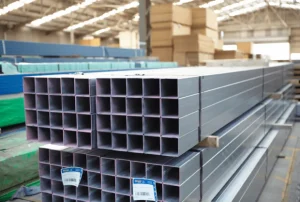
Rectangular pipes:
Similar to square pipes, rectangular ERW pipes are also commonly used as spatial structural support pipes.
Special shape pipe:
ERW pipe can be made into non-standard shape pipe according to the special care requirements of specific projects. Such as ellipses and opposites.
ERW PIPE STANDARDS
The manufacturing of ERW pipe follows the industry standards of some countries and regions. These industry standards regulate the specifications of resistance welded steel pipe technical parameters and test requirements.
- International standards: ISO 9001, ISO 3183, ISO 5304
- American standards: API 5L, ASTM A53, ASTM A500
- Chinese standard: GB/T 8162, GB/T 9711, GB/T 3091
- European standards: EN 10219, EN 10217
ERW Pipe Cost Calculation
Construction Waste of ERW Pipe due to Dimensional Tolerances.
Calculation formula: Waste Factor = 1 + (Actual Wall Thickness – Nominal Wall Thickness) / Nominal Wall Thickness
Actual Measurement Data: The effect of fluctuating wall thicknesses of ERW Pipe from different manufacturers on the consumption of welding rods.
The invisible expense of surface treatments.
The price trap of special coatings: the actual use of fluorocarbon coatings is 27% greater than the actual theoretical value.
ERW Pipe Welding Challenges
The residual height of the weld seam of ERW welding is small, which is convenient for 3PE anticorrosion coating to be evenly wrapped.
In order to ensure the toughness of the weld, it is necessary to strictly control the sulfur content of the base material (S ≤ 0.005%) and silicon content (Si < 0.35%).
Gray spot defects, the need to avoid the use of high-speed welding in the case of cold welding and inclusions.
ERW Pipe Selection Guide
- Automated formula for load bearing calculation
Input span (m)/load (kg/m²) and number of support points → Output the minimum pipe diameter and wall thickness combination required by AS/NZS 4100.
- Corrosive environment calculation model
Input parameters, chloride concentration/pH value/temperature → output recommended materials (Q235/SS400/X42, etc.).
Nota:
- Chloride ion concentration: over 5,000ppm must be alloy or galvanized material.
- pH range: SS400 is preferred for acidic environments (pH <6), and zinc-aluminum alloy coating is required for alkaline environments (pH >9).
- Temperature: P265GH can reduce the oxidation rate by 60% in high temperature environments over 40℃.
ERW pipe application scenarios
Oil and gas transmission: The ERW pipe can withstand high temperature and high pressure environments. For the extraction and transportation of oil and gas
Building engineering: The structural support and load-bearing components of building structures require high strength and good machinability of the pipe, and ERW pipe meets these requirements.
The automotive industry: The ERW pipe is widely used for frames and axles in automotive manufacturing, as well as exhaust systems, due to its excellent mechanical properties.
Power Industry: ERW pipe can meet the environmental requirements of long-term exposed piping systems in transmission towers.
TUSPIPE Steel Tube Manufacturer, with three complete tube production lines, produces steel tubes not only for boiler piping industry but also for a wide range of applications:
- Industria de la construcción
- Oil and Gas Steel Pipe
- Industria del tratamiento del agua
- Fabricación industrial
- Agriculture Pipe
- Industria naval
- Mechanical Processing
- Energía Transporte
TUSPIPE is known for its high quality, so be sure to get the pipe you need!