Inleiding
Engineers and builders decide which pipe to use for building work: carbon steel or stainless steel. Both pipes can carry liquids and gases efficiently. Accurate information is key to making an appropriate choice.
In this article, we cover both these pipes and when to use which one in your project. We also discuss the strengths and weaknesses of both materials.
What Are Carbon Steel Pipes?
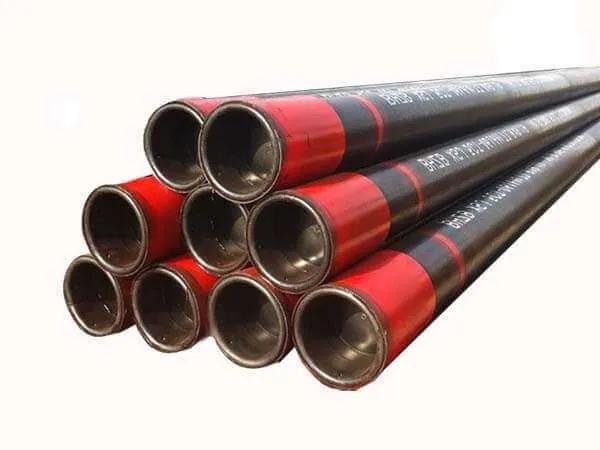
Carbon steel pipes are manufactured from carbon steel, which is composed of iron and carbon. It is produced using either steel bars or steel billets. The metals are subjected to heat and pressure to obtain a cylindrical form. The thickness of the metal pipe is measured during rolling or drawing.
It provides strong piping that can be laid either above or below ground. Carbon steel pipes are good for carrying pressurized water, gas, and steam.
Common types include:
- Hot-rolled carbon steel pipe
- Cold-rolled carbon steel pipe
- Seamless carbon steel pipe
- Welded carbon steel pipe
Hot-rolled pipes are used for boiler applications. Cold-drawn pipes for precision parts applications.
What Are Stainless Steel Pipes?
A stainless steel pipe is made of iron, chromium, and nickel. It begins as an acid-resistant, heat-resistant steel billet. The billets are heated, the metal is pierced, and the pieces are rolled into hollow tubes. The factory trims the material to standard project lengths.
This approach cleanly produces tubes for harsh environments. Stainless steel pipes are used by engineers in chemical, food, and medical facilities. The metal is used to move liquids without altering the taste or cleanliness.
Factories produce several forms, including:
- Seamless stainless steel pipe
- Welded stainless steel pipe
- Round stainless steel pipe
- Square stainless steel pipe
Seamless pipes are used for high-pressure systems, and welded pipes for regular layouts. Most projects have round pipes. Structural frames and equipment stands are supported by square and rectangular shapes.
Each stainless steel pipe is tested by quality inspectors before shipping. They inspect the wall thickness, surface finish, and alloy content.
Pipe Standards
Customers review the pipe specifications before placing the order. Specifications are provided to ensure sufficient pressure capacity, thickness, and testing methods.
Carbon Steel Pipe Standards
Seamless carbon steel pipes are specified in ASTM A106 for high-temperature applications. Carbon steel pipe standards for welded water and utility pipes are covered by ASTM A53. API 5L defines the pipe standards for oil and gas transport pipeline systems. The standard for testing in global construction projects is ISO 3183.
Stainless Steel Pipe Standards
For fluid transportation piping systems, the pipe standards are specified in ASTM A312. For plates and sheets used in the fabrication process, stainless steel pipe standards are specified in ASTM A240. For drill and casing, the stainless steel pipe standards follow API 5CT.
These standards allow an engineer to pick the right type of pipe. Hydrostatic pressure testing is done in a laboratory setting to ensure safety.
Key Differences: Carbon Steel Pipe vs Stainless Steel Pipe
Functie | Koolstofstaalpijp | Roestvrij stalen pijp |
Surface Appearance | Dark gray and rough surface | Silver, smooth, and shiny surface |
Sterkte | Higher hardness and strength, reaching around 500 megapascals | Around 480 megapascals with better flexibility |
Ductility | Lower ductility | Better bending and forming ability |
Gewicht | Heavier in many applications | Lighter with similar bending strength |
Slijtvastheid | Better wear resistance due to a harder surface | Lower wear resistance compared to carbon steel |
Heat Resistance | Handles high heat well, often above 300°C | Handles heat and cold conditions depending on the grade |
Common Uses | Steam lines, gas transport, water systems, structural support | Food processing, chemical plants, medical systems, and marine equipment |
Maintenance | Requires coatings or painting during service life | Requires less surface treatment during operation |
Machining | Easier to cut and weld | Slower cutting and controlled welding are needed |
Best Environment | Dry systems and high-pressure service | Wet, salty, and chemical environments |
How to Choose Between Carbon Steel Pipe and Stainless Steel Pipe
Project teams review several factors before selecting pipe material.
Transported Substance
Firstly, one must look at what will go through the pipe. Saltwater and harsh chemicals can damage carbon steel pipes. In these situations, stainless steel pipes are more favorable.
Carbon steel pipes have the strength to carry high pressures in natural gas, water, and steam transport systems.
Temperatuur
Temperature is another factor to consider when choosing a pipe. Carbon steel pipes are effective in steam systems above 300 degrees Celsius. These pipes are generally used in boilers and industrial heating lines.
Stainless steel pipes are used in old storage and food processing systems. Also, some grades can be used in furnaces.
Kosten
Price is one of the elements that affects buying decisions. A carbon steel pipe is generally cheaper because raw materials are less expensive.
The increased cost of a stainless steel pipe is related to alloy content. Workers need to work with slower cutting speeds and more controlled welding methods.
Appearance
For visible piping systems, stainless steel pipe is an ideal choice because it stays clean for a long time. The material is used by architects in kitchens, hospitals, and public buildings.
Carbon steel pipe is more appropriate for systems that are hidden in walls or underground trenches.
Advantages and Disadvantages of Stainless Steel Pipes
Voordelen
Stainless steel pipe is suitable for food factories. It is also effortless for workers to tidy the lines daily using strong chemicals. Smooth inner walls also minimize bacterial accumulation. The same feature is used by medical systems for transporting sterile liquids.
Stainless steel pipes are used in marine applications. They can withstand the harsh coastal environment for many years.
Flexibility is another benefit. Without cracking the surface, workers bend a stainless steel pipe around corners.
Nadelen
The one drawback is the cost. The addition of chromium and nickel increases production costs. It also requires special equipment and more time to cut and weld a stainless steel pipe.
Repair crews mostly store fewer spare sections since replacement costs are higher.
Advantages and Disadvantages of Carbon Steel Pipes
Voordelen
industrial plants. The pipe is capable of enduring high pressure without bulging.
It also has good properties for use in steam systems and boiler lines. The metal is welded with standard welding equipment and cut with common cutting tools.
Reduced material costs help make large projects on budget.
Nadelen
The main disadvantage is the need for frequent maintenance. During long service periods, workers use paint or epoxy coating to provide a protective surface.
Transport and lifting expenses are also high with heavy weights. Extra support beams and stronger cranes are typically used while installing.
In outdoor piping systems, carbon steel pipes also require periodic testing.
Conclusie
The appropriate pipe can be used based on the project’s actual needs. Heavy loads and systems operating at high temperatures use a carbon steel pipe. Food plants, medical lines, and wet areas are supported by a stainless steel pipe.