Inleiding
Steel pipes are applied in different sectors to transport oil, gas, steam, and water. The two standards, API 5L and ASTM A106, can be compared because they have nearly identical applications.
There are differences in the application of API 5L and ASTM A106. The API 5L is suitable for pipelines, while the latter is for high-temperature applications.
Scope of Application
The biggest distinction between API 5L and ASTM A106 is their uses.
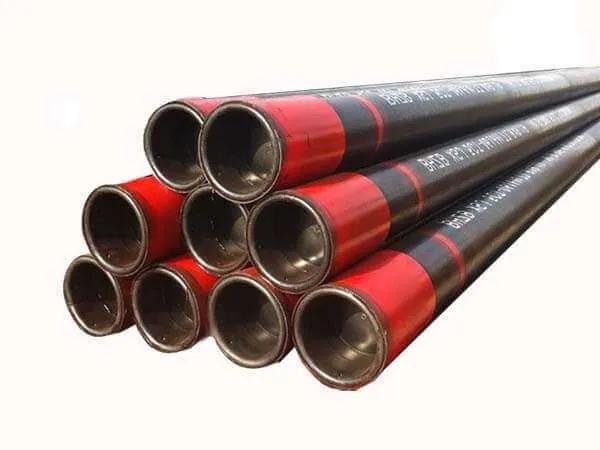
API 5L is a pipe made from steel and used in transporting natural gas, oil, and water across long distances in pipelines. It is available in two grades, PSL1 and PSL2; the latter has more stringent quality requirements.
On the other hand, ASTM A106 steel pipe is an alloy pipe made to withstand superheated and high-pressure conditions. Its application ranges from boiler rooms and power plants to refineries and ship construction.
Engineers will select API 5L steel pipe when making pipeline systems. ASTM A106 steel pipe is chosen for heat- and pressure-service applications.
Types of Steel Tubes
ASTM A106 utilizes only seamless steel pipes.
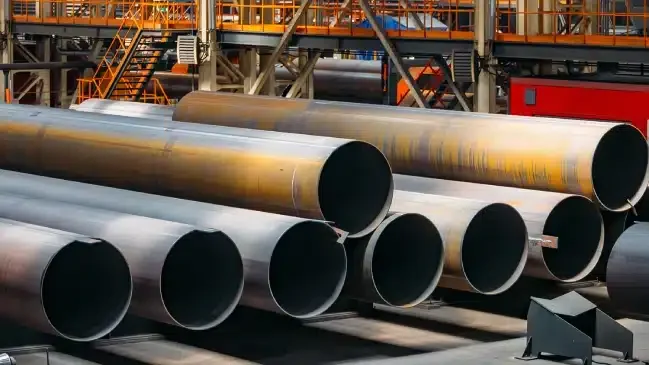
API 5L involves both welded and seamless steel pipes. Examples of welded steel pipes include SAW, ERW, HFW, and CW.
API 5L is more readily applicable to industrial applications than ASTM A106, as it covers both types of steel pipes.
Afmeting
API 5L has a greater range of dimensions than ASTM A106. Their dimensions range as follows:
Stalen pijp | Dimensions range |
API 5L | From 0.405 to 84 inches |
ASTM A106 | From 0.405 to 48 inches |
API 5L is good for both small and large pipelines. ASTM A106 is suitable for medium-sized pipelines that operate under high pressure.
Chemical Components
The chemical composition of steel pipe affects strength, heat resistance, and durability.
Eigendom | ASTM A106 klasse B | API 5L klasse B |
Koolstofgehalte | Max 0.30% | Max 0.28% (Seamless) / 0.26% (Welded) |
Silicon Content | Min 0.10% | No minimum quantity |
Sulfur Content | Max 0.035% | Max 0.030% |
Quality Levels | Standard grading | PSL1 and stricter PSL2 |
Alloy Control | Basic control | Stricter alloy element limits |
To perform better in a high-heat environment, ASTM A106 has a slightly higher carbon content. API 5L follows strict chemical rules, especially PSL2. Lower sulfur content means less impurity. This helps API 5L steel pipe perform safely in harsh systems.
Mechanische eigenschappen
API 5L and ASTM A106 also differ in strength.
Eigendom | ASTM A106 klasse B | API 5L klasse B |
Treksterkte | Minimum 415 MPa | Minimum 415 MPa |
Opbrengststerkte | Minimum 240 MPa | Minimum 245 MPa |
Common Higher Grades | Grade A, B, C | X42, X52, X60, X70 |
There are many grades of API 5L steel pipe useful for heavy pipeline work. In common API 5L grades, the number after “X” indicates the maximum pressure or stress the pipe can withstand. It is calculated in thousands of pounds per square inch (ksi). This allows the pipe to be used for hard loads and for lengthy distances.
Delivery Conditions
ASTM A106 has simple rules for heat treatment processes.
Hot-finished ASTM A106 pipe does not need extra heating. Cold-finished ASTM A106 pipe should be heated to more than 1200 degrees Fahrenheit after forming.
API 5L uses delivery letters for processing conditions:
Letter | Its Meaning |
R | Rolled |
N | Normalized |
Q | Gedoofd en getemperd |
M | Thermo-mechanically processed |
Delivery options ensure that API 5L steel pipes meet various specifications.
Conclusie
Both pipes are suitable for different needs. API 5L should be used for the transport of oil and gas. ASTM A106 can be best suited for high-temperature, high-pressure environments.
API 5L steel pipes may be either seamless or welded. Steel pipes of ASTM A106, however, are only seamless carbon steel.
The choice of pipes should depend on the factors, such as pressure, temperature, material and working conditions.